
How ‘Help (2)’ became our album of the year
In a year that has seen much debate about whether artists should remain apolitical on stage and on social media, HELP(2) reminds us that music can be a force
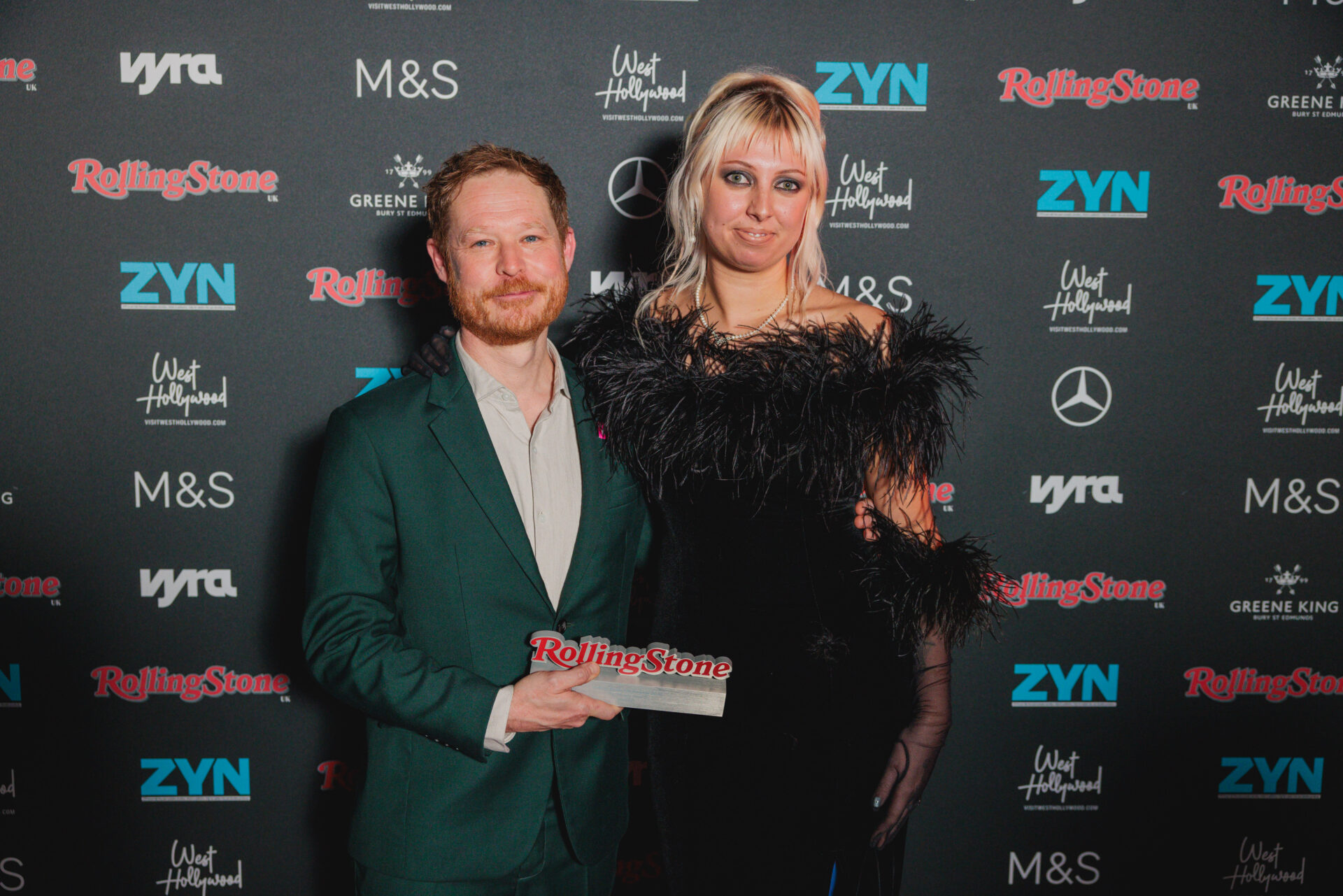
Talking to Rolling Stone UK back in January about the music community coming together to record a charity album for War Child, the organisation’s executive head of music Rich Clarke said, “You look up and you’ve got [Fontaines D.C.’s] Grian Chatten having a talk with [The Libertines’] Carl Barât by the door. You’ve got Damon Albarn sat with Jonathan Glazer on one table. And then suddenly all of Pulp walk in and they’re in a queue to get their lasagne.”
For one week last autumn, the iconic Abbey Road Studios was a hub of activity. Luminaries including Olivia Rodrigo, Arctic Monkeys, Wolf Alice and many more pooled their talents to record HELP(2), the follow-up to the groundbreaking 1995 release from War Child and the winner of The Album Award at the Rolling Stone UK Awards 2026.
Founded in 1993 by filmmakers David Wilson and Bill Leeson, War Child was set up in response to mainstream indifference to the ethnic cleansing occurring in Bosnia and Herzegovina during the Bosnian War. The original HELP album boasted tracks from the likes of Oasis, Paul McCartney, Manic Street Preachers, Sinead O’Connor and more, and was mastered by Brian Eno in a single day across multiple studios and released less than a week later. In a pre-internet and social media age, the album would raise over £1.25 million to provide critical aid to the one in 10 children who were caught up in conflict.
Fast-forward to 2022 and the impetus for a new HELP album was set in motion after Russia’s invasion of Ukraine. Since then, conflict has escalated throughout the Middle East, putting more than 100 million children globally in danger. In 2024, producer James Ford (Geese, Gorillaz) began work on the follow-up record.
Looking back to the original album, Ford recalls its release as a big cultural moment and a powerful snapshot of British music at that time. “I suppose we wanted to stay true to the vision of the original one,” he tells Rolling Stone UK of his plan for the follow-up, to try to capture a moment in time “and provide a vehicle for our music scene to use their voices for a good reason”.
He was joined by Arctic Monkeys, who have a pre-existing relationship with War Child, having played an exclusive benefit concert in 2018. James Helders of the iconic indie band told Rolling Stone UK, “If he’s [Ford] putting something together, we know it’s going to be for the right reasons, and also be a good-quality thing as well.” Arctic Monkeys would regroup in a studio setting for the first time for a few years to work on an exclusive track for the record, ‘Opening Night’, an unfinished song that lead singer Alex Turner had been working on for over a decade.
In early 2025, Ford was sadly diagnosed with leukaemia and yet, while unable to attend recording sessions due to his ongoing treatment, still provided remote production support and pulled together an incredible cohort of acts, including other War Child alumni.
Original contributors Damon Albarn and Graham Coxon of Blur returned, this time joining forces with Fontaines D.C.’s Grian Chatten, Kae Tempest, Olivia Rodrigo and English Teacher. Ford recalls Albarn’s request to pull lots of musicians together for the track ‘Flags’, which “really captured the spirit of the whole thing”. It’s an atmosphere he has been looking for reasons to recreate ever since, with everyone showing up “with the most fantastically open mind”.
Oasis also offered a live recording of ‘Acquiesce’ from their 2025 return as an exclusive bonus track. Other heavyweights from the Britpop boom of the 90s to come on board include Pulp’s Jarvis Cocker, who recorded ‘Begging for Change’, 30 years after donating their 1996 Mercury Prize winnings for the era-defining album Different Class, believing that the HELP album should have been the rightful winner in that year.
Elsewhere on the album, recent talent includes Fontaines D.C. with a cover of Sinéad O’Connor’s ‘Black Boys on Mopeds’, and Olivia Rodrigo with Magnetic Fields’ ‘The Book of Love’, with Ford guiding the session via Zoom while receiving a blood transfusion. “It gave me something positive to focus on rather than worrying about my health,” Ford said of his time in hospital.
Alongside the album, director Jonathan Glazer (Sexy Beast, The Zone of Interest) came on board as creative director with a simple concept: “by the children, for the children”. As such, the action from within the studios of Abbey Road was captured on hand-held cameras by local primary school children and woven together with footage shot on smartphones by children living in war zones in Gaza, Ukraine, Sudan and Yemen. The resulting short film, Joys of Joys, premiered at this year’s BFI London Film Festival.
The finished project arrived in March 2026, in a year when mainstream performers from Ed Sheeran to Metallica’s James Hetfield have denounced use of their public platforms to discuss topics of a political nature, preferring to remain neutral or “apolitical”, and sparking online debate and criticism in doing so. Although Ford has mentioned in interviews this year how his initial callout to some artists was turned down, stating that the project was “too political”, he recalls how it felt like most artists were very keen to be involved.
“I think it happened at a time when the news cycle was/is unrelentingly bleak, and I think most people feel they want to help in some way but don’t know how. Help(2) provided a small outlet for that,” he says.
More than 200 crew and industry experts donated their time and resources to facilitate the production of HELP(2), achieving over 47,946 physical sales and 47 million streams with no media spend. More than 30 years on from the original landmark album, the statistic of children living in conflict zones has doubled to one in five, approximately 520 million children. Translating the album’s physical success into tangible measures of aid, 11,000 LPs sold is the equivalent of therapy for 790 children, while the proceeds from selling 5,000 CDs provide daily meals for 68 families.
The ongoing efforts of War Child continue to push the boundaries of what a charity album can be, while also standing testament to what can be achieved when people with influence choose to adopt a stance through their art. “I think the time to be passive and apolitical has passed,” Ford says. “We are in an information war. People need to take action to positively affect their sphere of influence in any way they can, especially if you have a platform, to try to steer the collective ship in a better direction.” He concludes, “A brighter future is still possible, but time is running out.”