
Madra Salach discuss the hunger at the heart of debut album ‘Gorta’
The Dublin band’s upcoming full-length debut uses the stories of mythical figures to connect the past and present of their homeland in powerful fashion. They tell Rolling Stone UK about making a record that dives into “the strange tapestry that is Irish history”
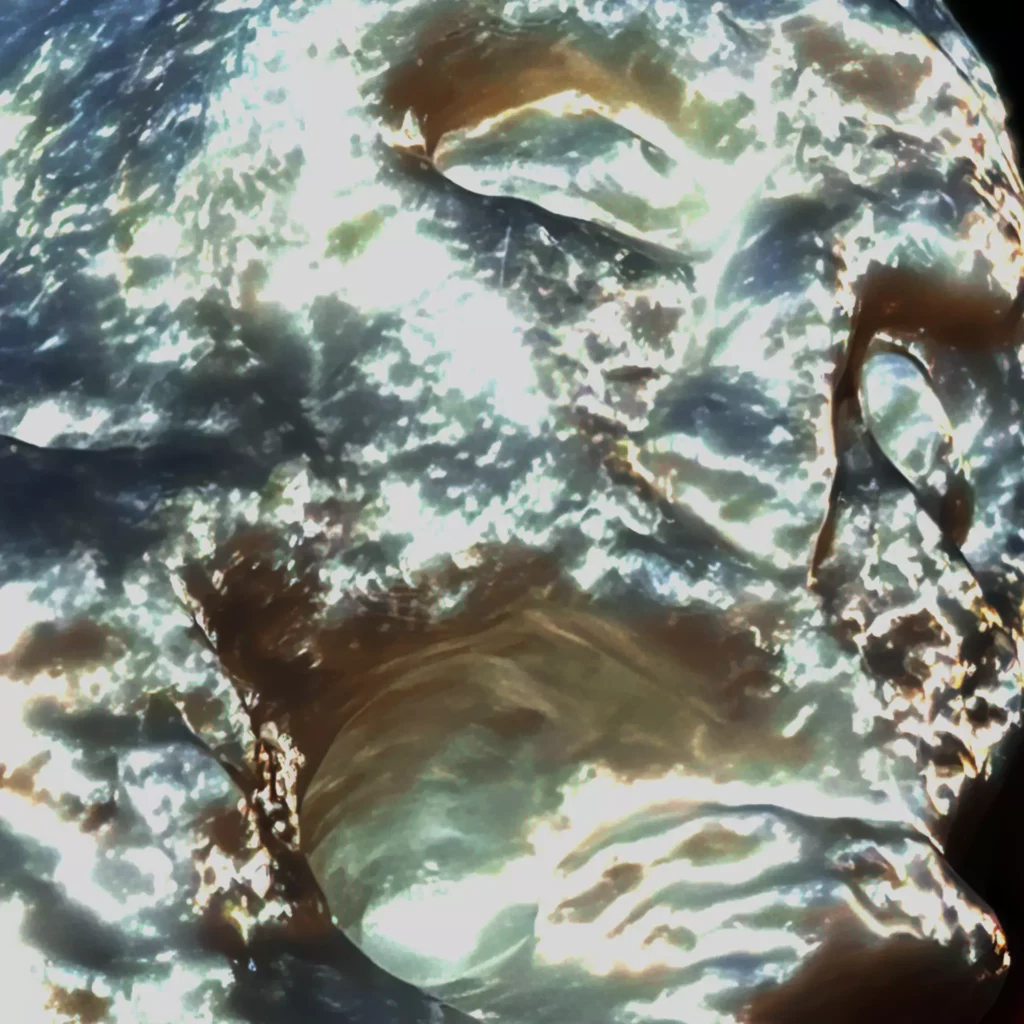
The artwork for Madra Salach’s debut album, Gorta, is equal parts gorgeous and troubling. Created by Irish artist Oscar Torrans, it depicts a face that is gleaming but also in clear distress. Beams of light – or perhaps water – pour into its open and featureless mouth as the figure appears to disintegrate.
The art’s inspiration is an amalgam of two dark and somewhat disturbing mythological creatures. One of these is the Irish medieval sculptures known as Sheela na gigs. Often found adorning the entrances to churches and castles in Ireland and across Europe, the carvings of women with exaggerated and exposed vulvas were supposedly meant to ward off evil spirits.
Torrans also looked to the mythology of the Blemmyes, sometimes known as akephaloi or “headless ones,” figures who had no traditional head. Instead, their faces protrude from their torsos, with the generally assumed metaphor being that, while we think our heads know best, the real truth comes from the stomach.
Paul Banks, singer of the fast-rising Dublin folk band, wanted Torrans’ artwork to portray a figure with “hungry eyes” and a “wild, desperate expression.” Gorta, the album’s title, translates from Irish as “hunger” or “famine,” with the folkloric Irish character The Fear Gorta literally meaning the Man of Hunger. “Hunger is a feeling that comes from inside,” the album’s first line goes, with Banks later describing it as “a hammer,” “a sin,” “horrendous,” something “that kills”.
Across their stunning debut full-length album, Madra Salach take the idea of a gut feeling to new extremes, using the parable to distil the murky but undeniable inherited trauma that persists today on – as Banks names it on the album’s final song – his “haunted isle of green.”
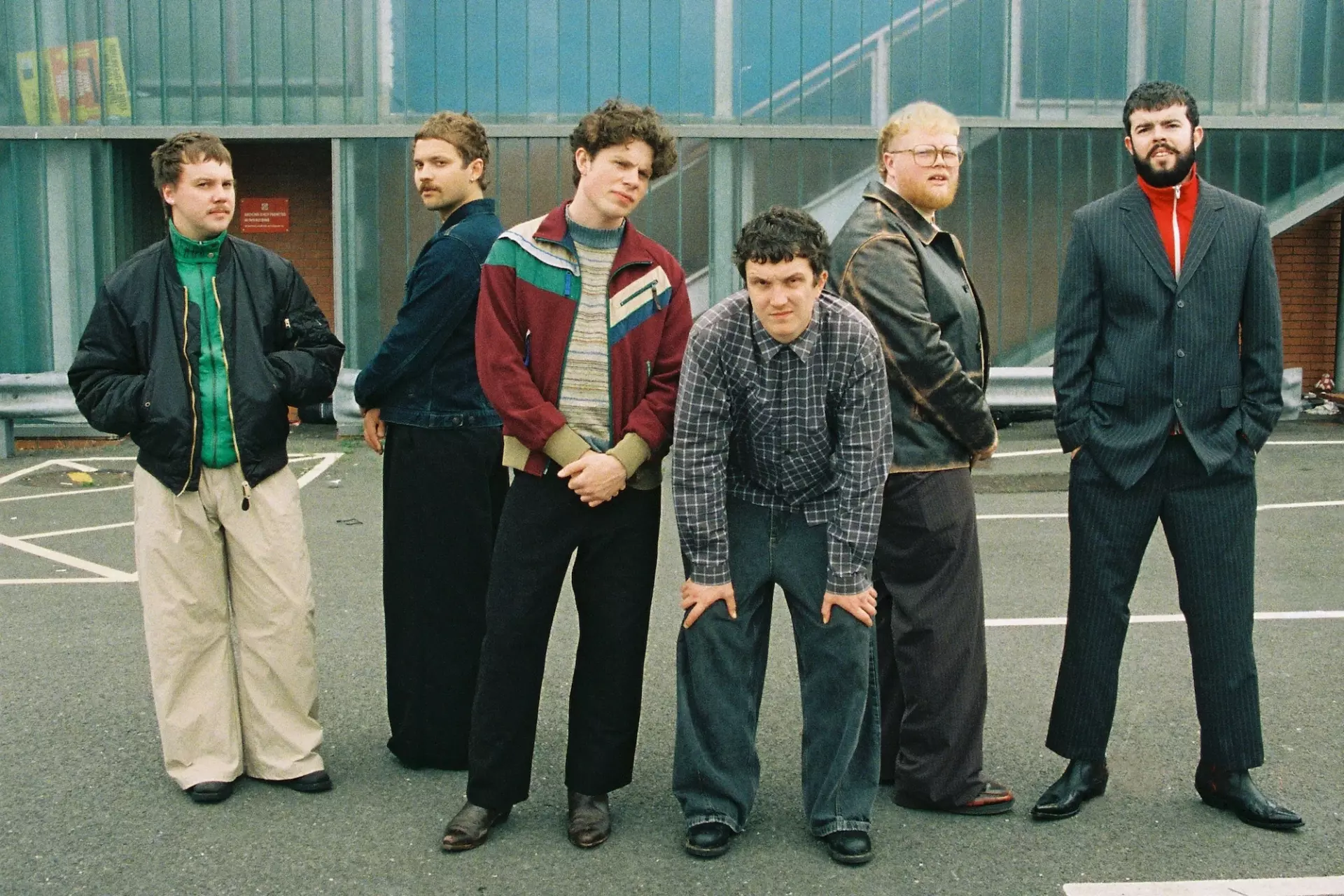
For a decade now, much of the best music made on the British Isles has been coming from Ireland. Both the indie singalongs of Fontaines D.C. and country-tinged pop of CMAT now fill arenas, while traditional folk is back in the zeitgeist thanks in large part to Dublin’s Lankum and Dundalk’s The Mary Wallopers.
Banks credits the latter two acts for paving the way for Madra Salach’s lightning-fast ascent, and especially their success abroad. While two decades ago their folklore-inspired, bilingual songs may have bemused crowds in Poland or Germany (both places where they have gone down a storm at festivals this summer) Banks says his band are now received by crowds who “we’re not trying to convert” thanks to their predecessors.
Regardless of context or language barriers, Madra Salach are a mighty presence on stage, led by Banks’ booming voice. Reminiscent of Neutral Milk Hotel’s Jeff Mangum in its sheer strength and volume (the band have routinely covered ‘In the Aeroplane Over the Sea’ at gigs), the voice is backed up by the menacing harmonium playing of Maxime Arnold and a band who you can tell were raised on punk music rather than traditional folk.
“The way that we play is a bit more uninhibited, because you’re not thinking about the rules of traditional Irish music,” says Jack Martin, who can be found on stage with a guitar, synth, tin whistle or whatever else a song requires. “We’re playing these traditional instruments in the way that we know how to play them. It’s not necessarily the ‘correct’ way, [but] that’s created a unique sound.”
While last year’s debut EP, It’s a Hell of an Age, showcased their songwriting ability and Banks’ remarkable voice, it’s new single ‘Ribbon Factory’ – the first taste of Gorta – that finally translates the band’s live energy and snarl on record. It’s one of plenty of punk-influenced moments on Gorta, an album that at different points also utilises gloomy, ambient drones, swinging accordion and lo-fi, homespun acoustic guitar.
Both Lankum and The Mary Wallopers gather much of their material from traditional songs stretching back decades or even centuries, some of which have been passed down so many times that the identity of their original authors is anybody’s guess. Only one non-original appears on Gorta, but Madra Salach’s version of Ewan MacColl’s 1966 song ‘Tunnel Tigers’ is a hugely impactful one.
Written by the Salford-born MacColl – father of the late Kirsty – to soundtrack a BBC documentary about the Irish workers that dug the tunnels under the River Thames to build the London Underground’s Victoria Line, the band found ‘Tunnel Tigers’ through a version by Frank Harte, one that is largely faithful to MacColl’s acoustic and atmospheric original.
Brought to the band by Banks, bassist Jack Lawlor then proposed “a really fast, charged version” of the song, the singer remembers. “It brought out a side of the song that wasn’t always explored in the other versions,” he says. On their vicious, punky version of ‘Tunnel Tigers’, Banks ferociously spits out lines in memory of the workers “driving a tunnel through the London clay,” sung with the relentlessness of shovels hitting the ground over and over.
The song fitting so seamlessly into the modern lens of Gorta serves to reduce the perceived gap between traditional folk music of old and that being made today. It’s a compliment, Banks says, for many listeners to have assumed that the Madra Salach song ‘The Man Who Seeks Pleasure’ was written decades ago and passed down. “It fills me with a lot of pride to have your own writing mistaken for something that has stood the test of time,” he smiles.
“If you’re writing folk music in the 21st century and try to make it sound like an old song and use words that you wouldn’t normally use, it sounds like playacting or a bit renaissance fair,” he adds. “I like to think that we’ve found a way to write in a way that’s of today and from today, but still very much within the folk ethos.”
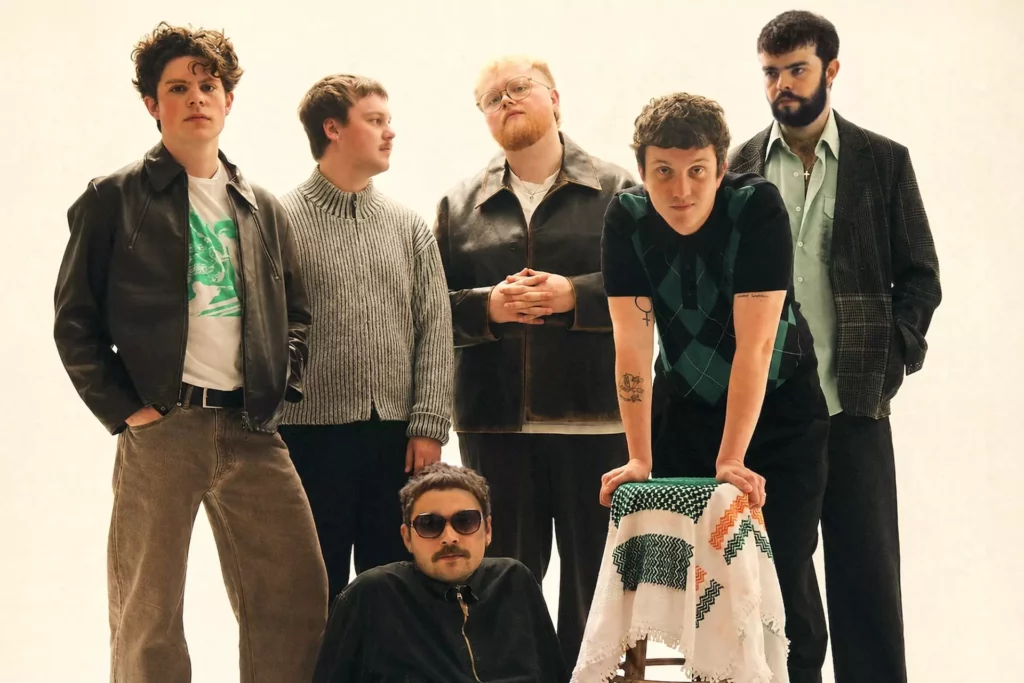
Indeed, it’s easy to imagine ‘The Man Who Seeks Pleasure’ being spun into countless different versions in the future, reshaped by modern artists to fit their own realities. To Banks, folk songs are “this living, breathing thing with different characteristics. It feels like it has a soul or something.”
This ethos relates back to the binding concept at the heart of Gorta. Through the framework of hunger, Banks’ lyrics explore not only the clearest and most obvious interpretation of the theme, relating to the Irish famine and the long tail of its impact, but a more opaque type of yearning.
On ‘Searrach’ (a young horse), our narrator is “full but I’m craving,” while on ‘Haunted Isle of Green’ he is “hungry no more” yet “cannot shake off what I’ve seen.” Banks says: “One of the goals of the album thematically is to paint a picture. What is a 21st century Irish person like? In what context do they exist, and why are we the way we are?
“As Irish people, we’re the result of everything that was inflicted on our country and everything that happened in the strange tapestry that is Irish history,” he adds. On ‘Haunted Isle of Green’, he describes himself as “the son of the hungry one,” closing an album that signals the true arrival of a special band, both of then and of now.