
Moses Boyd makes a stunning gospel return
The south Londoner has poured his whole life into outstanding, faith-led new album ‘Songs for Sinners’. “I already know it’s going to be a very emotional work for the world and for me,” he says
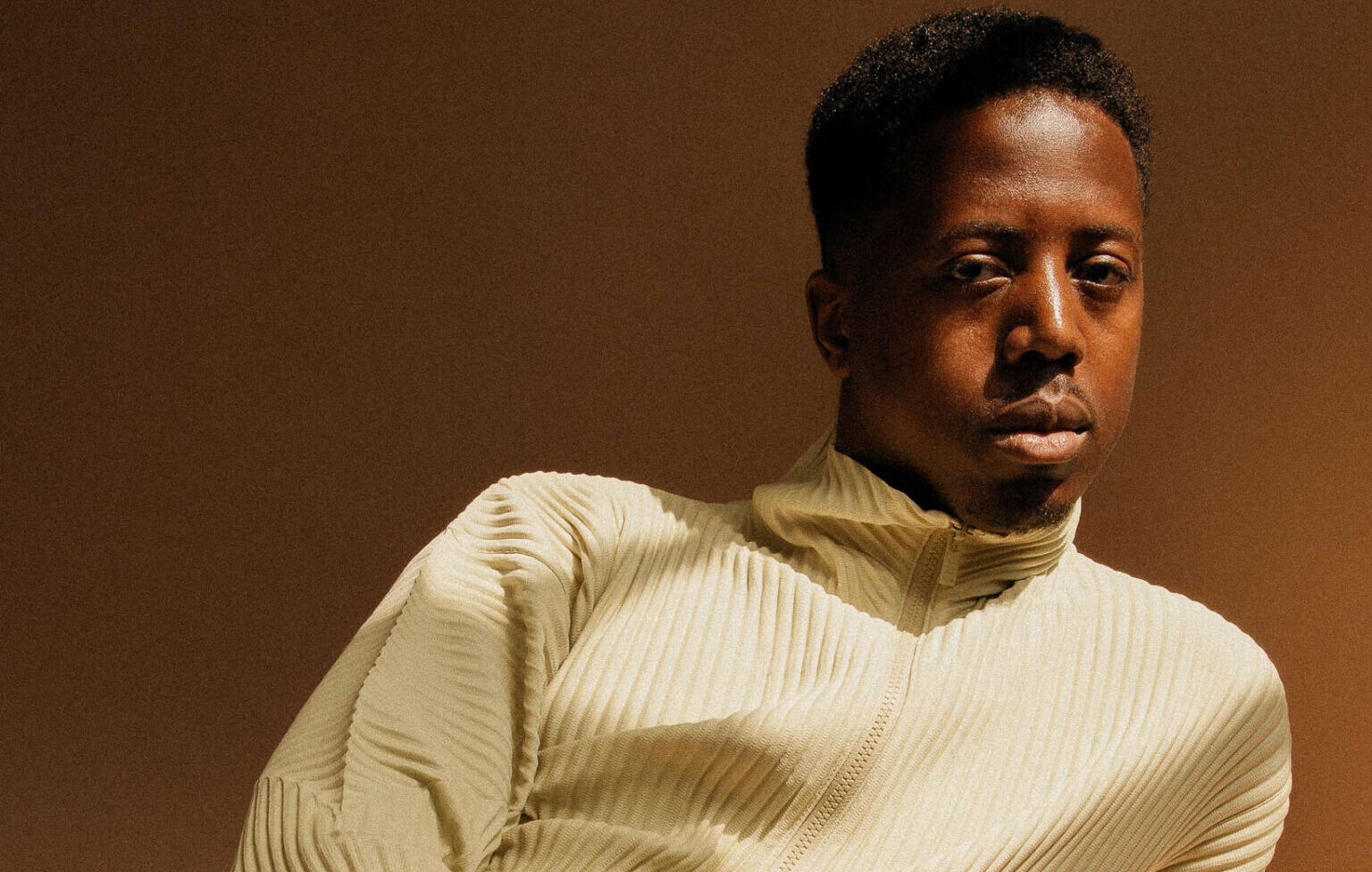
Whenever he would play music in church as a child, Moses Boyd could always imagine more than what was in front of him. Gospel music is infused into the bones of all who grow up in this south-east London community of Caribbean immigrants and their descendants, providing the same type of comforting glow that others get from watching an old TV show or eating a home-cooked meal. When he heard, or was asked to play, this music in church though, Boyd’s first thought was of how much he wanted to remould it in his own image. A few decades later, he finally had the chance.
Getting his start in the same London jazz scene that spawned his contemporaries Ezra Collective, Nubya Garcia, Shabaka Hutchings and more, Boyd’s intricate but muscular drumming and unique composition style made him a breakout star. His 2018 track ‘Rye Lane Shuffle’, a dazzling and energetic toe-tapper, would be right at the top of a hypothetical Greatest Hits compilation of that scene. As the pandemic hit, Boyd then released his debut album Dark Matter, which went on to be nominated for 2020’s Mercury Prize.
In a somewhat similar way to the post-punk bands that coalesced around the Brixton Windmill, the musicians from the UK jazz scene that Boyd grew up around have since gone in countless different sonic directions. Most of them now make music that doesn’t sound a whole lot like jazz: Ezra Collective can be seen playing their horns in a DJ booth at a Fred again.. rave, while Shabaka is playing the flute with André 3000, and Sons of Kemet drummer Tom Skinner plays with Thom Yorke and Jonny Greenwood in The Smile.
Boyd agrees with the suggestion that what brought this scene together was the musicians’ sense of adventure and ethos, rather than a rigid loyalty to jazz itself. “Maybe it was just the start,” he posits. “It was the glue that kept us together.” That philosophy, and lack of genre-based purity, now fuels Boyd’s own about-turn, the stunning gospel record Songs for Sinners.
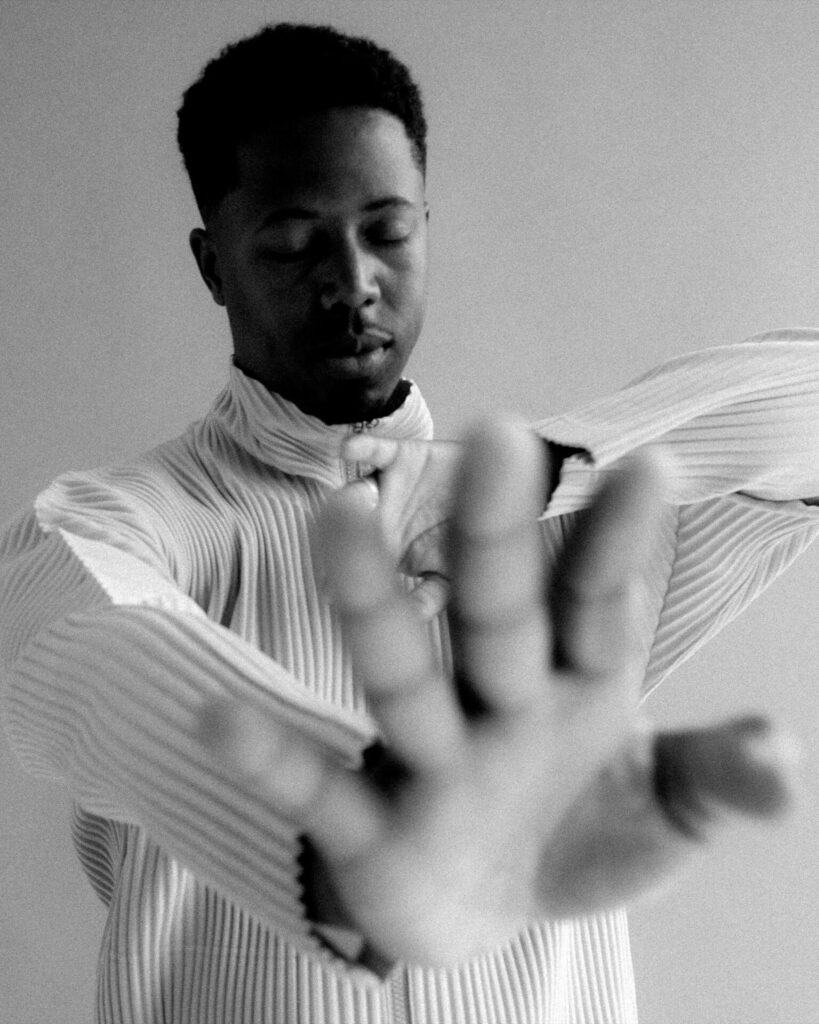
Having wanted to make music that reflected his upbringing for years, it was when Boyd was touring the world with his jazz music that the idea for the new record and sound began to form. “This boy from south London is suddenly in Khartoum, Sudan, on the Blue Nile, chatting to these Sufi Muslims,” he remembers with a smile, connecting the dots between his own experience at a Pentecostal Black church and the countless different ways faith ties communities together across the planet. “This is a bit different from church in Camberwell!” he remembers telling himself when exploring ideas around Buddhism with locals in Vietnam. “Seeing the world opened my eyes a lot more.”
Rather than taking on the insurmountable task of exploring faith and religion on a macro scale, Boyd zoomed in on his own experiences of church to make an album of memory, community and specificity that is also universally translatable. Songs for Sinners features a “kitchen sink choir” of his family all singing together in Boyd’s house, interpolations of songs that are infused into his community’s DNA from decades of church services, and lyrics that explore the impact of his faith throughout his life.
It makes sense, then, that we meet Boyd in the south-east London heartland that he was forged in. “I went to school just up there,” he points as we sit in the picturesque Beckenham Place Park. The park used to be a golf club when he was growing up, making it inaccessible to most who actually lived in the area, and Boyd shares his pleasure at it now being available to all.
“This is the most I’ve been myself, or the most of myself I’ve ever put into music,” he says of Songs for Sinners. “I put myself in all of my music, but this is…”
“Different?” I suggest.
“I’m singing songs I grew up singing in church with my family,” he says by way of affirmation. “My family’s on the record singing, recorded in my kitchen. It’s telling the story of me growing up in a Caribbean church, very religious family. I grow up, I get into jazz and sound-system music. It’s bringing all of that in. There are conversations around faith and interacting with other people also on that journey of their relationship with faith. It’s a very, very real album to me.”
The importance and seriousness of the record’s message and wider meaning is abundantly clear when pressing play. The album’s lyrics, written exclusively by Boyd himself for the first time, anchor it as both a celebration of faith but, maybe more importantly, an invitation to explore your own relationship to it. “I’m not the greatest singer, but if this [album] is so much about me, it just felt right,” he says of his own voice’s leading role on the album. When he is joined by guest vocalists, all of whom have their own parallel relationships with church and gospel, they and Boyd are instinctively singing from the same hymn sheet.
By Boyd’s own admission, he poured himself into the creation of Songs for Sinners to an often maniacal level. From hunching over his laptop with his headphones on, totally unaware of a world-beating view in front of him on a family holiday to St Lucia, to getting a band together for sessions at the appropriately named Church Studios in north London with just days’ notice, the album came together over frantic and impulsive bursts across half a decade. “I’ve always been a good worker,” the drummer says, “but there was something in me at that time that was saying, ‘Moses, get to work,’” he remembers. “I did so much in that period that I can’t really explain. There was no reason to go that hard.” Shortly afterwards, the reason arrived in the form of the news that he was expecting his first child.
Immediately, the fabric and reason for his album existing shifted once again. “At every stage of making the album, my life changed,” Boyd reflects. “You just hear the music slightly differently” when you become a parent, he says. “It’s quite a deep record in that respect.”
Boyd is slightly hesitant to label Songs for Sinners as a gospel record – it’s too prescriptive a word, he thinks. “It has to speak to you wherever you are. My mum and my pastors will probably dislike that,” he laughs, “but I didn’t want to make people’s minds up. To me, gospel is preaching and telling, and there isn’t that on this record.” Instead, he describes it as “a soundtrack to faith,” adding: “I want people, wherever you choose, whatever you’re doing, to have that conversation with themselves, as I have, as millions of people have had throughout eternity. Within the gospel realm, that [message] was lacking for me.”
As well as a conversation starter in itself, Songs for Sinners is also in dialogue with other transgressive modern albums that grapple with faith. He namechecks Rosalía’s iconography-packed masterpiece LUX, the work of fellow south Londoner Dave and Atlanta’s Killer Mike as examples of faith-driven but non-prescriptive recent albums that he admires, with Songs for Sinners a superb new addition to that expanding canon.
“I understand why it’s all happy-clappy,” Boyd says of gospel music at large, “but so many people you talk to have had a bad experience with church. They’ve had a great experience with church. Maybe not church – maybe they’re Buddhist! It’s beyond denomination and specificity. It’s [about] your relationship with faith, faith in your people, faith in a higher whatever. We all have that push and pull, and that’s what I was trying to get to the core of. That’s why I struggle sometimes to call it a gospel record; it’s not quite preaching. I’m not making anyone’s mind up. Sonically, yes. Message, no. This is an album for anybody, and particularly anybody that’s come from a background of faith, irrespective of what religion that is.”
It’s also an album for Boyd’s son, composed both before and after his birth, and an invitation to the world of faith rather than a demand. “This is definitely the hardest I’ve worked at anything,” Boyd says with pride before he leaves to go and pick up his son. “It connects so much of my community and is a very particular sound and story that’s infused in the record.” Sometimes, he says, you need to know what you’re making in order to get it done. Here, an impulse he describes as “mystical” swept him along a path towards this special and impactful album, the meaning of which only came into focus after it was completed.
“Moses, you needed to make this thing!” he says to himself as if transmitted through some higher power. “I already know it’s going to be a very emotional work for the world and for me,” he boldly and correctly says of Songs for Sinners. “I know I’m going to meet loads of people that this is going to connect with… I’m not prepared for that!”
Taken from the October/November issue of Rolling Stone UK. Buy your copy here.