
Lisa Nandy warns ‘pop is getting posher’ as Ed Sheeran inspires new music libraries scheme
The UK government's Culture Secretary tells Roling Stone UK about the government's new Turn It Up scheme, which aims to bring music to the masses
By Nick Reilly
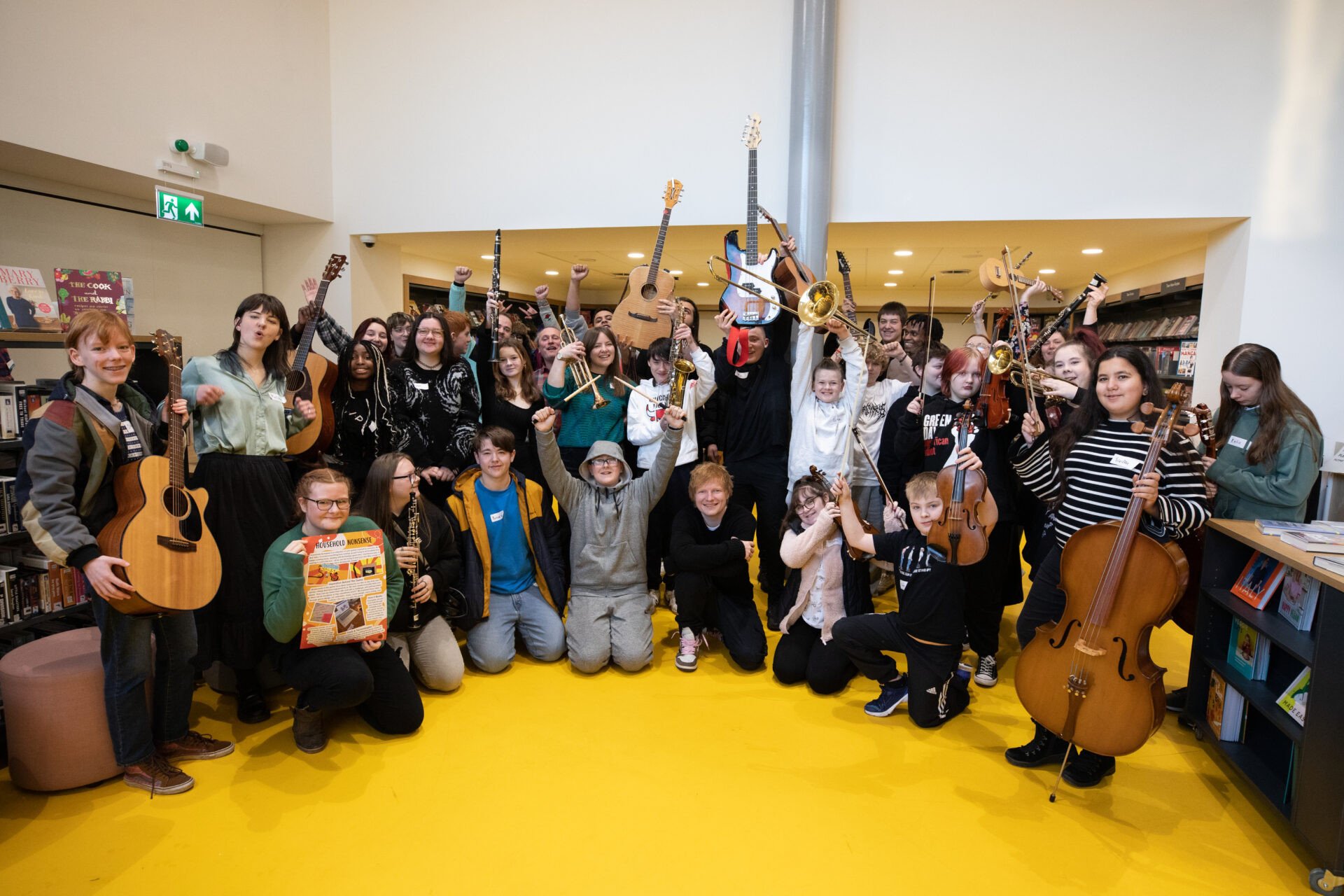
The UK government’s Culture Secretary Lisa Nandy has warned that “pop is getting posher” as the government unveils a new range of boosts for the music industry, including transforming public libraries into music lending spaces.
The new initiative was directly inspired by Ed Sheeran‘s charity The Ed Sheeran Foundation, which has previously funded music lending in libraries and youth centres. It forms part of the new Turn It Up: Our Plan for Music initiative which was unveiled yesterday (July 14).
Sheeran first championed the idea when the Culture Secretary met him during a visit to the singer’s hometown of Ipswich. The scheme has now secured £12.5m in funding, which will go towards recording booths, mixing desks and an array of other equipment being installed in libraries.
“I first met Ed a few weeks into this job at the Euro 2024 final where I was introduced by former Sports Minister Tracey Crouch,” Nandy told Rolling Stone UK. “Ed is incredibly passionate about kids from state schools having opportunities in music and he’d just read that we had become the first entirely state school-educated cabinet in history and wanted to do something together. On that visit to Ipswich, he showed us what he was doing, we kicked around some ideas and the lending library came out of that.”
The new initiative, Nandy explains, is an attempt to counteract her belief that “pop is getting posher”.
As part of this, an extra £15million will be given to the pre-existing Music Growth Package, which aims to help the emergence of artists at home and across the globe.
At least £10million of dormant assets of funding will also go towards a Creative Mentoring scheme, which will give thousands of children in the care system and young people the opportunity to receive in-depth mentoring from creative practitioners.
“The last Labour government had a program called Every Child a Musician and enrichment funding was flowing into our schools,” Nandy told RS UK.
“You had a whole host of people in the cabinet who were passionate about music because it had changed their lives. I would say we’re recreating that passion and that commitment with this government.”
The announcement comes as Keir Starmer prepares to stand down as Prime Minister, with Andy Burnham widely anticipated to replace him.
“A lot of this journey started with the Greater Manchester Music Plan,” Nandy said. “Michael Dugher has been appointed as our first UK music champion, and Andy previously commissioned him to come in and write a strategy for Greater Manchester to rebuild some of that.”
She added: “It was about helping to rebuild the whole ecosystem from the ground up because every artist starts somewhere. And that ‘somewhere’ has largely disappeared in recent years. This plan takes its inspiration from something that Andy started years ago and that I was very proud to be a part of.”
Other new announcements include reforms to the licensing system such as increasing the number of Temporary Event Notices (TENs) from 15 to 20 per year and raising the total event days for festivals from 21 to 26.
The announcement also confirmed the government is freezing the 15 per cent business rates relief for live music venues for the next two years.
Tom Kiehl, CEO of UK Music commented: “UK Music has previously called on the government to deliver a long-term music strategy to help safeguard and grow our world-leading industry that contributes £8billion to the economy, brings in £4.8billion in export revenues and supports 220,000 jobs. It is welcome that the government have listened to our calls and are launching a Music Plan.
“This long term plan comes at a time when it is more crucial than ever that we join forces to find solutions to the challenges facing our world-leading sector. These include the impact of artificial intelligence on music creators and companies, the barriers to overseas touring, the threats music spaces face, the challenges small businesses and freelancers experience, and the need to protect music in schools.”
Kiehl added: “We look forward to working with the government, its music champion Michael Dugher, our members and the rest of the music industry to make the make the most of this opportunity, to build on the foundations that a Music Plan creates, and to ensure that our sector remains a pillar of growth which helps boost jobs and opportunities right across the UK.”