
Meet Pigeon, the Margate band turning 30-minute jams into technicolour brilliance
Cross-cultural identity and musical exploration fuels this special new band’s debut album, ‘OUTTANATIONAL’
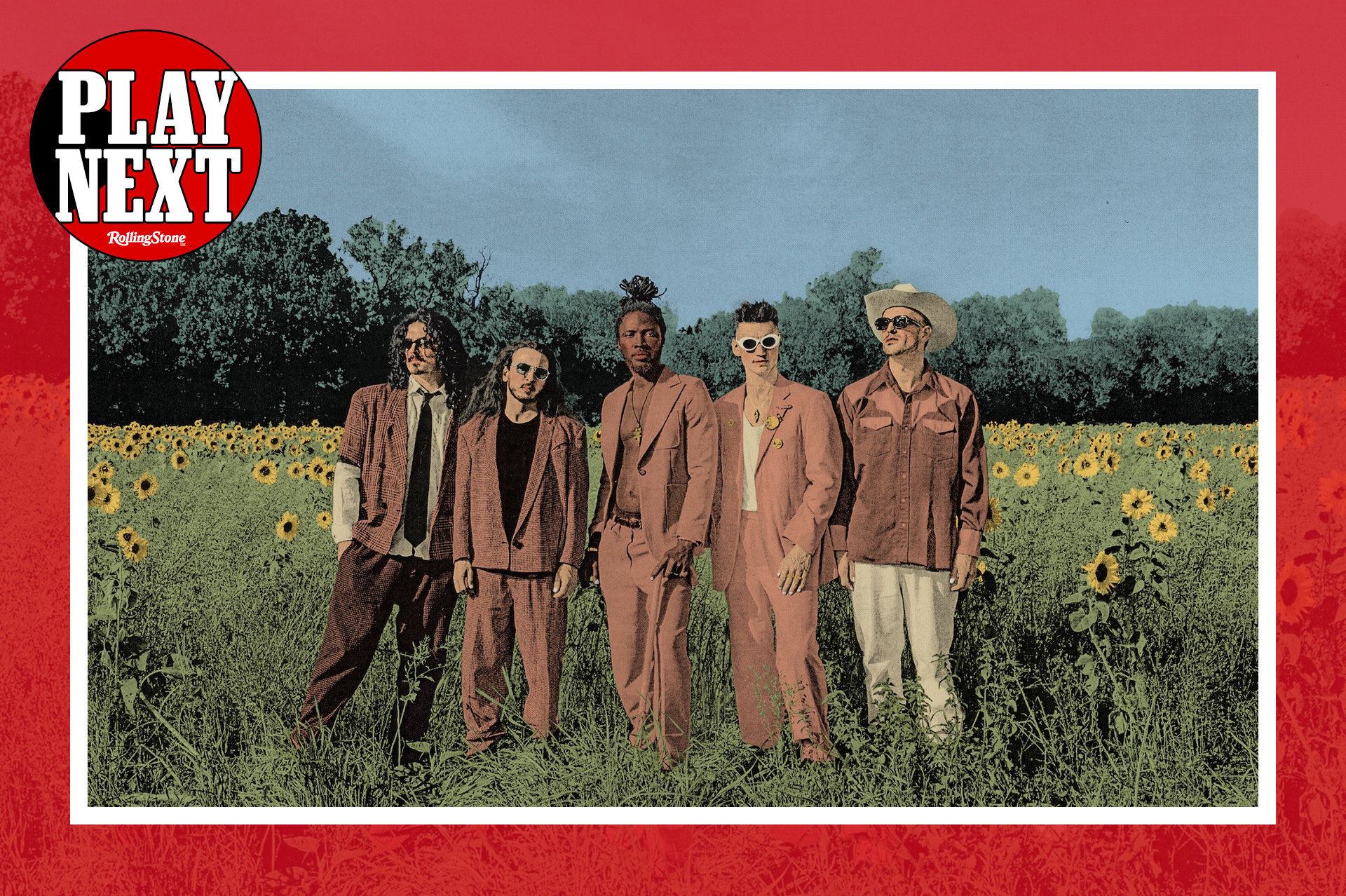
In most of the Western world, pigeons are regarded as ignorable at best, and detested eyesores at worst. It’s inexplicable to Falle Nioke, frontman of the brilliant Margate band named after the bird.
In his childhood in Guinea-Conakry, Nioke – like many in his country – kept the bird as a pet. “It was the only thing I had when I was a baby,” he says. “You’d open their mouth and feed them peanuts. Then when it’s time to fly, they fly.” He’d attach boxes to nearby trees for the pigeons to return to, then selling them on for pocket money.
This same theory drives ‘Miami’, the exuberant and vital new single from the Margate band named after the maligned bird. While many might focus on the rain and prevailing dreariness of the Kent seaside in winter, it can feel like a Floridian paradise with the right attitude, and this song as your soundtrack.
With previous credits ranging from Little Simz to Michael Kiwanuka and SAULT, the members of Pigeon came together to make extended jams in practice sessions, often stretching out for up to 30 minutes.
The songs heard on upcoming debut album OUTTANATIONAL (out May 1) are trimmed significantly from this, but retain that exploratory spirit and improvisational feel. New single ‘Mirror Test’, out now, is a great example of this formless experimentation being trimmed down to a danceable, propulsive four-minute pop song.
Read our Play Next interview with Falle and guitarist Tom Dream, and listen to Pigeon via our Play Next playlist on Spotify, below.
Tell us about the start of the band and how you came to work together…
Falle: I still think it’s the work of the universe to bring us together. Maybe [it] could feel at this point, ‘If I bring them together, they might do something which they themselves can’t even expect, but it has to come together for that to happen’. When we all meet, we just want to experience something which we have never heard before. That is the aim of Pigeon – to do something which is not there before.
Is it true that you started the band after all going to watch the football together at the pub?
Tom: There’s a café in Margate called Cliffs. If you lived in Margate ten years ago, it was kind of the only place. The guy who ran it is a big lighting engineer for bands like Black Sabbath.
Falle: I remember you saying, ‘Falle, what are you doing next?’ I said I’ll be going home because England isn’t going to win.
Tom: I’d seen Falle singing on the harbour in Margate and singing. There were a lot of bands that moved from London, but they had their thing already and weren’t looking to experiment. I come from an Irish family where everyone just sings, and that’s the natural way. I was looking for somebody to do that with. I just wanted to hang out and play tunes with Falle. That started something.
Falle: That’s how we practice as well. If you can’t stand up and do it in front of one person, you can’t do it in front of thousands of people. My first time [performing] I was 14. I was dancing but I was also shaking on stage. ‘Look at all these faces and these eyes looking at me!’ In Africa, we always go to places where you can have people come down and sit next to you [and watch you perform]. That’s how people knew me in Margate too.
The themes on the album concern your African heritage and new life here in Britain – how do the lyrics come together and what is the feeling they represent?
Falle: It’s hard for me to sing [just] one language in a song. I always have to feel it. Maybe if I hear something, in my mind I will be [thinking of it in one language]. It’s cool because sometimes I don’t even know how my brain does it. If I say it in this language, it might be beautiful with the melodies. I don’t do all the lyrics myself – some of them come from the group chat. I’ll be on the mic singing my lines and then I look again and someone says, ‘Falle, can you sing this?’
Tom: Falle was doing his tests for British [citizenship], having to learn about the kings and queens. We were being offered shows internationally at the time, but he couldn’t have travelled because he didn’t have his passport. The song ‘Miami’ came off that – we had this real desire to be somewhere else. There’s an absurdity to it that led to that tune.
Falle: Coming from Africa and then living in the United Kingdom, no matter how I sing in an African language, or how beautiful it is, I will get some barriers. I’m glad we’re doing Pigeon because most of the work isn’t just in my mind – it’s the mind of everyone. If [the band] send me lyrics in English, no matter how hard it is, I’m going to try and do it. Sometimes people ask me, ‘What are your lyrics?’ Oh man, don’t ask me what they are! Let me get the Dictionary…
Can you tell us about the extended jam sessions from which your songs emerge?
Falle: Someone will start playing something, and we all follow. Through that jamming, that’s how we create.
Tom: Everyone has very different tastes and instincts. Someone will have something and we’ll pursue that for a while, and then hand it over to someone else who will take it over and go in a different direction. Every time we met, we made an album’s worth of music probably.
Falle: We can be playing one song for 20 minutes or half an hour, and then we’d stop and do it again.
Tom: That’s the hardest thing, getting songs out of that.
And finally, Tom – has meeting Falle changed your opinion on pigeons?
Tom: I love pigeons! I could talk about them all day, to be honest. It’s the saying you have, ‘Pigeon must fly’. When you said that for the first time, I realised that we need to move forward because that’s the experience that’s best on stage. You get it a couple of times at a gig, when you’re playing and you’re really connected – it’s like you’re flying.