
‘We were very inept’: how Pulp got their start in Sheffield
This exclusive extract from Daniel Dylan Wray's new book ‘Groovy, Laidback and Nasty’ tracks the earliest days of the Britpop heroes. “People found us funny because we were such a mess,” Jarvis Cocker says
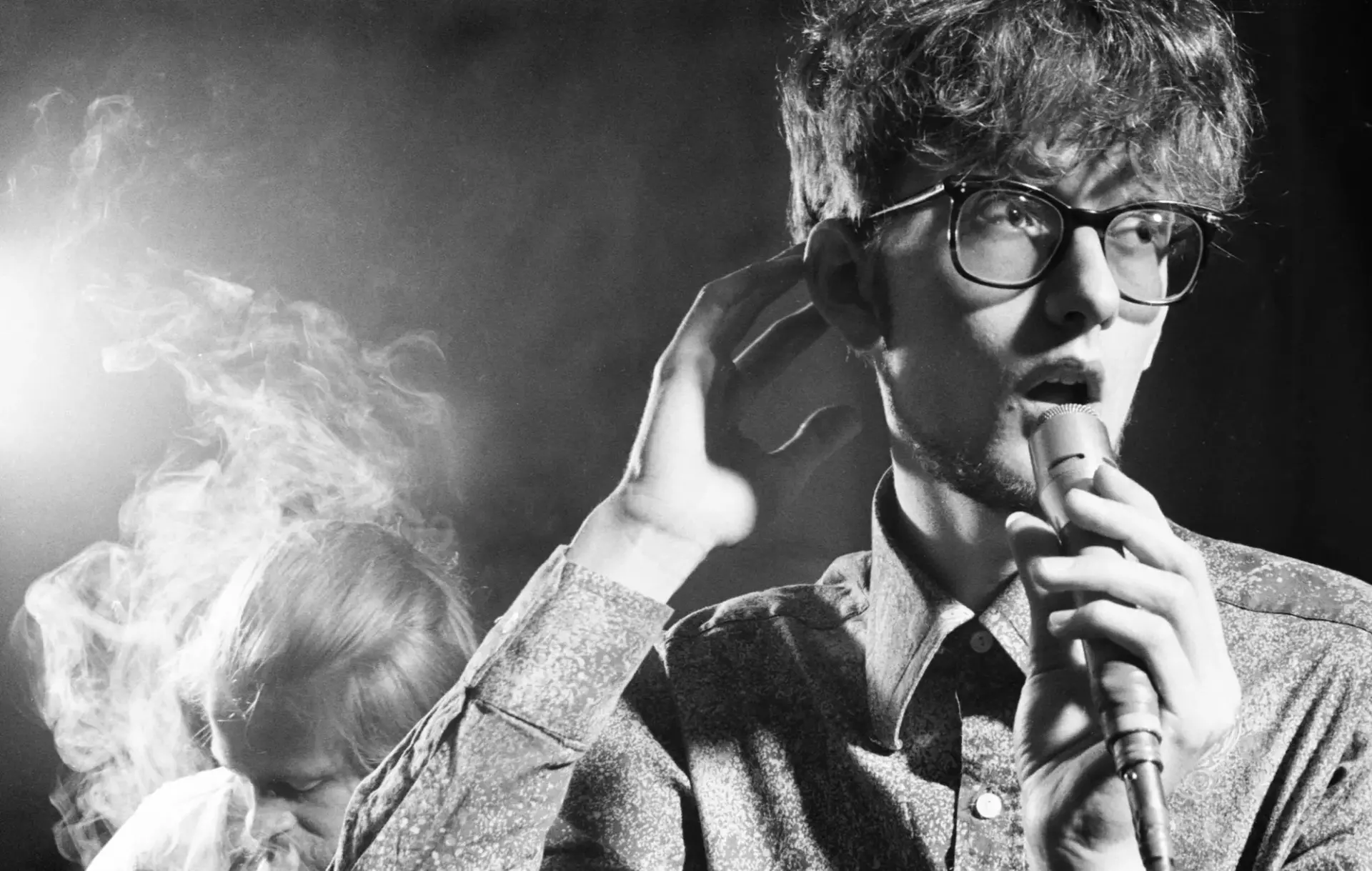
While Pulp had technically formed a couple of years earlier as a school band, 1980 was the year they properly came to life. Although it was a difficult time to become a band in many ways. “It was just when everything was starting to shut down,” Jarvis Cocker told me. “Just when I’d left school it felt like a time when things should be expanding but the whole of the north was contracting and I resented that. I took it very personally.”
A year earlier, when the mysterious Marcus Featherby had burst into town from seemingly nowhere, he landed with a thud of enthusiasm and promise. Suspicious and irritating to some, he was charming and endearing to others. He had become Artery’s manager and, true to his word, within a year of landing in Sheffield he was trying to put the music of the city on the map. He compiled and released the compilation album, Bouquet of Steel, featuring local bands like Artery, Comsat Angels, Vendino Pact and I’m So Hollow, along with numerous others.
When Featherby put out a call out for submissions for the compilation, via the local paper, Pulp applied. They were unsuccessful but did get a little mention in the accompanying booklet that doubled up as a kind of directory for local bands at the time. They were also invited to play the one-day festival at The Leadmill that was an effective launch party for the record. Pulp were second from the bottom and played an early afternoon slot. It wasn’t the most auspicious of beginnings, as they turned up stinking of cabbage after borrowing a greengrocer’s van to take their gear to the venue. The band’s bass player, freaked out by squealing feedback, began walking away from it to such a degree that he fell off the stage.
“We were very inept and people found us funny because we were such a mess,” Cocker later told me. The band were on so early that Cocker went home after Pulp’s show to have his tea and then came back to see Artery, a concert that blew his mind. “Once I’d seen Artery that was it,” he said. “I knew what I wanted to do. I’d never seen anything like that before and I probably haven’t since.” Bouquet of Steel was released on Featherby’s Aardvark Records (“shittest name ever” according to Cocker). This was a venture that
a young Tony Perrin helped him run. “He basically talked me into quitting my degree to join him and help with the label,” says Perrin, who would soon himself be managing Artery, then Pulp, and go on to a successful career representing everyone from The Streets to Bloc Party. Despite talking a good game, Featherby’s reality didn’t always match up with the fantasy. “Marcus was a bit of a Walter Mitty character,” says Perrin. “He was well intentioned but he just didn’t have the skill set, or the resources, to do the things he wanted to do with the label.”
Bouquet of Steel was not a huge success. “I don’t think it had any impact at all,” says Perrin. “I don’t think it moved any of the bands forward in any way, and it wasn’t particularly well received. Hicks from the Sticks, despite its patronising title, was probably a better record.” Perrin also feels the time, money, energy and resources that went into the compilation should have been spent on Artery. “The band were ready to go, they had the songs, but
it just didn’t happen in time,” says Perrin. “If they’d been able to get in a decent studio, with a decent producer, in ’79/’80 the band’s story might have turned out differently. Bouquet of Steel didn’t sell very well, it certainly didn’t make the money to get Artery into the studio to make their album, and things just kind of stagnated for the band.”
Artery – who played intense, menacing, post-punk – were a beloved band for whom many had expected success. Their live shows came with a ferociously intense reputation. So much so that NME’s Steve Sutherland once described them as “the only band I have ever seen who, when the singer approached the microphone, the audience would take a step back.” Perrin recalls the shows as “unhinged and even the ones that weren’t unhinged always felt like they could go that way at any minute.” One show that sticks in the memory of many took place in the upstairs of The Marples pub. Mark Gouldthorpe had taken over vocal duties from Mick Fiddler by this point in the band, and during the intense buzz of
noise, Gouldthorpe climbed out of the window mid-set. He went out onto a narrow ledge that was about thirty feet from street level, and was threatening to jump on top of moving buses travelling below, encouraged to do so by his own bandmates, before he came back in behind another curtain. “If he had jumped, I’m sure he’d have broken his neck,” recalls Perrin.
They had a rehearsal room above The Beehive pub on West Street that was supposedly scattered with bloodstained mattresses, and apparently one time the band deliberately saved up three weeks’ worth of piss in bottles to pour out of the window onto students below who were out for pyjama-jump night (a local university tradition of a pub scrawl in nightwear).
Despite being a chaotic bunch, John Peel loved them and they did numerous sessions. Plus, they knew how to put together a photo shoot to catch people’s attention. Photographer Pete Hill was their preferred man for such elaborate set-ups. “One shoot
involved them all hanging from a tree by their ankles, just wearing underpants,” he recalls. “Each member had a friend hold them until everything was ready, they then lowered them down and I’d bang off a few shots until the pain became too much. All the time families were walking past ushering their children away.’ Another shoot, equally painful by the sounds of it, involved them hanging by the wrists from a fan light in a school shower cubicle, while another decision to paint their faces white backfired. “They’d used gloss, which is an oil-based paint,” recalls Hill. “It took days sitting in baths to wash off.”
Jarvis Cocker looks to Artery as a bit of a lost hope. “They were really amazing,” he told me, “a major formative influence on me and they had that intensity that was up there with Joy Division. But they didn’t have a Factory or anyone to make them known. They got stuck in Sheffield, got frustrated, band members got off their heads, lost it, and it never really happened for them.” Meanwhile, for Pulp, a run of local pub and club gigs followed
in their first year of operation, including one at a Wimpy in which the band were paid in burgers. They’d use cardboard and cone hats to spell out P.U.L.P. at gigs and Cocker would wear his mum’s cut-up curtains as trousers. Some of the more theatrical elements of Pulp’s live show were in response to an article Cocker had read about Prior to Intercourse, the previously mentioned short-lived performance art duo of Robert Baker and Kath Furniss. “That performance art thing. It was all supposed to be meaningful. We’re taking the piss out of things being artistic and meaningful, because it wasn’t.”
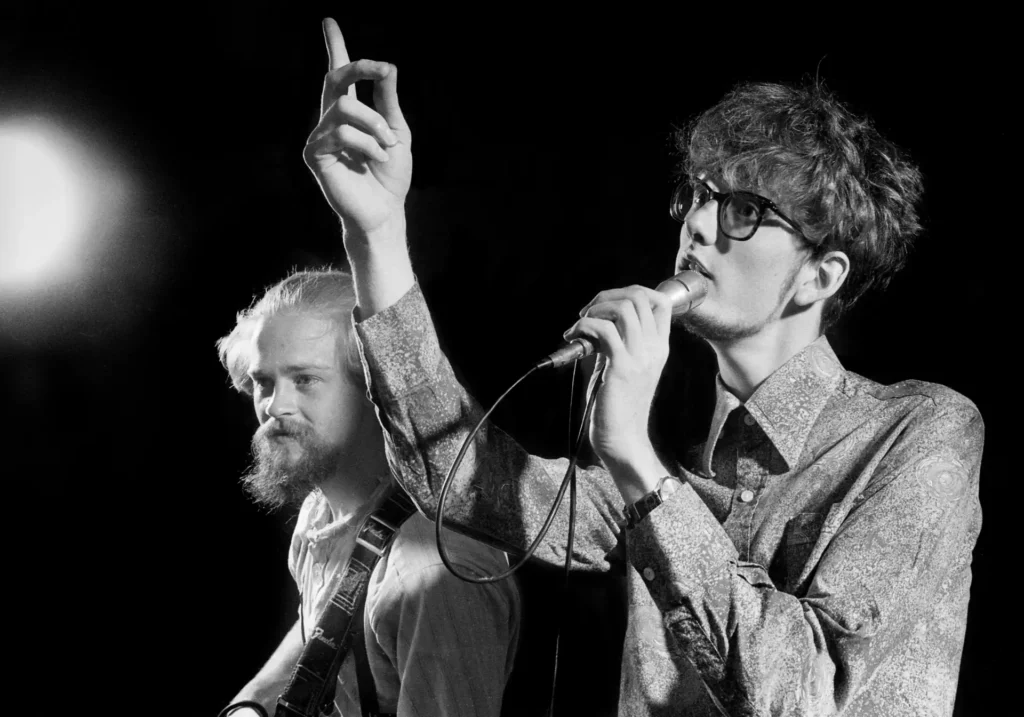
From early on, Sheffield was divided into two camps: either you thought this lanky oddball was a pop star in waiting or he was wasting his time completely. “There are only two options,” Russell Senior once said of the Cocker dichotomy. “You’re either a pop star or you’re scrubbing crabs.” Pulp’s future bass player, the late Steve Mackey, also mirrored this. “My friend Steve and I always used to say that Jarvis would be a complete star or he’d be
a waster, sweeping the streets for the next twenty years,” he said. “Everyone knew that in Sheffield.” Even Cocker himself, despite harbouring serious ambitions for a life more glamorous than flogging fish down a market, had to accept he was not a conventional
frontman. “The raw materials I was dealt with at birth had me marked out for a Blockbusters contestant” he once said.
As early as 1981, the group, despite having a very limited number of songs, decided to record their first demos. So it was off to Ken Patten’s Studio Electrophonique, given the lack of options in the city. It was a place where Cocker would later recall Patten proudly boasting that he had managed to make his own vocoder for the total cost of 50p: consisting of toilet roll tubes (that’s where the budget went) and some specialist communication microphones that he had kept from his RAF days.
Pulp recorded four songs at Studio Electrophonique: ‘Wishful Thinking’, ‘Turkey Mambo Momma’, ‘What Do You Say ?’ and ‘Please Don’t Worry’. While there’s a post-punk and new wave urgency to some songs, with scrappy, scratchy guitar and melodies racing against driving rhythms, tracks like ‘Wishful Thinking’, later released on their debut, showed the stirrings of a group who were unafraid to lean into slower, more pop-focused and even soulful terrain. While Pulp were still in their infancy and working with fairly basic skills, they were still making a clear point to try and create a sound that felt different. “We
were trying to be a pop group,” Cocker told me. “That classic Sheffield thing of the drummerless trio had been established a few years before we got going. I don’t think we had a very Sheffield sound.”
When John Peel was in town for a roadshow at the Polytechnic, again at Psalter Lane, a young Cocker went, hoping to thrust their demo into his hands. “I lurked awkwardly for the whole evening,” he said. As Peel was wrapping up, Cocker took his chance. Five
days later the phone rang at Cocker’s grandmother’s house and the band – aged between fifteen and eighteen at the time – were invited down to London to record a session. “This was heaven,” said Cocker. “A dream come true.”
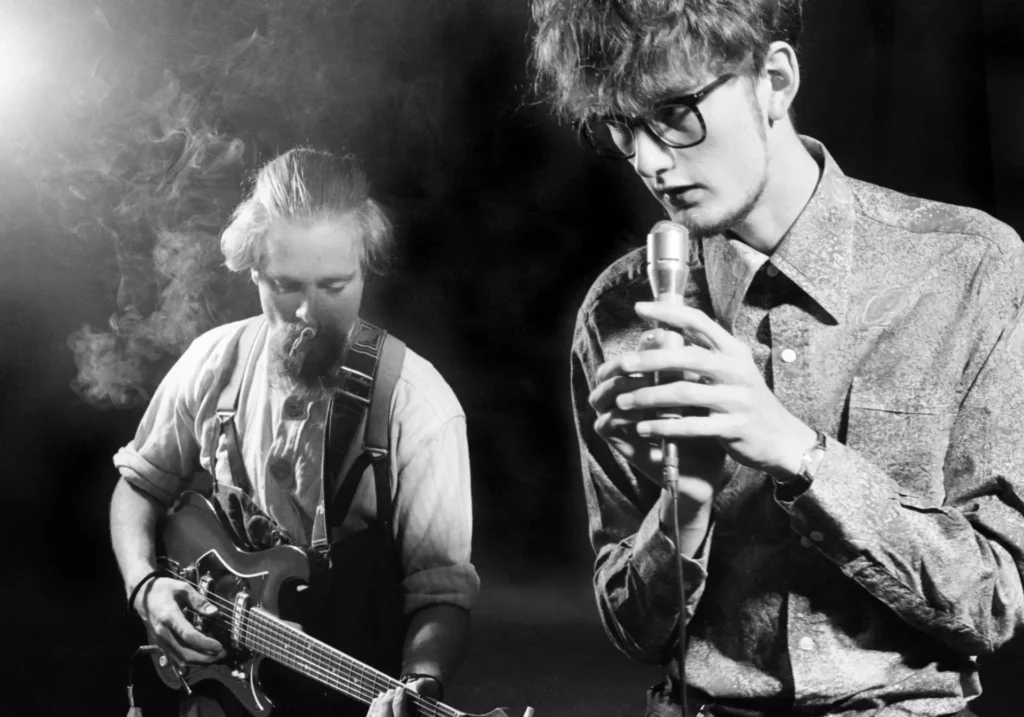
Pulp landing a Peel session was a big deal. Cabaret Voltaire had only just recorded their first Peel session a few months before Pulp, and they had released four albums and an EP on Rough Trade by this point. With Pulp still being teenagers, the Sheffield Star even ran a news story about it. “That really shocked people,” Cocker told me. “Because they just thought we were a bunch of daft school kids – which I suppose we were.”
They didn’t have any equipment, so borrowed loads from local band, The Naughtiest Girl Was a Monitor, as well as bringing home-made stuff, and using an ironing board as a keyboard stand. Once in the studio they had little idea of how most stuff worked. “The crisis point came when Wayne [Furniss] was attempting to get a home-made synth-drum to work,” recalled Cocker, “that a friend of his at school had made out of a rubber burglar alarm mat and an old electronic calculator. Dale Griffin [producer] looked at this 15 year-old kid crouching on the floor bashing what looked like a doormat with some wires coming out of it, and just put his head in his hands.”
It would take twenty-five years before this Peel Session was ever officially released, with Cocker requiring some distance from it. “It seemed so embarrassingly naive,” he said later. “You can certainly tell we’d been listening to the John Peel show fairly religiously for the past 4 years. ‘Turkey Mambo Momma’ is one part ‘Gone Daddy Gone’ by the Violent Femmes – we’d borrowed a xylophone from school – mixed with a bit of early Pigbag. ‘Refuse to Be Blind’ is just a blatant Joy Division rip-off. ‘Please Don’t Worry’ and ‘Wishful Thinking’ are at least a bit less derivative.” Cocker felt this was the moment that would set him on a trajectory to stardom. “The session convinced me I was going to be a
teen star,” he told me. “That gave me the guts to say I didn’t want to go to university.’ However, teen stardom would have to wait, as would stardom in his twenties for the most part. It would be another twelve years before Pulp recorded any more music for
John Peel.
Daniel Dylan Wray’s ‘Groovy, Laidback and Nasty: A History of Independent Music in Sheffield’ is out now via White Rabbit Books. Order a copy here.