
Diesel finds beauty in the chaos of over consumption
Creative director Glenn Martens transforms the Italian brand's archive into a gloriously chaotic manifesto on excess
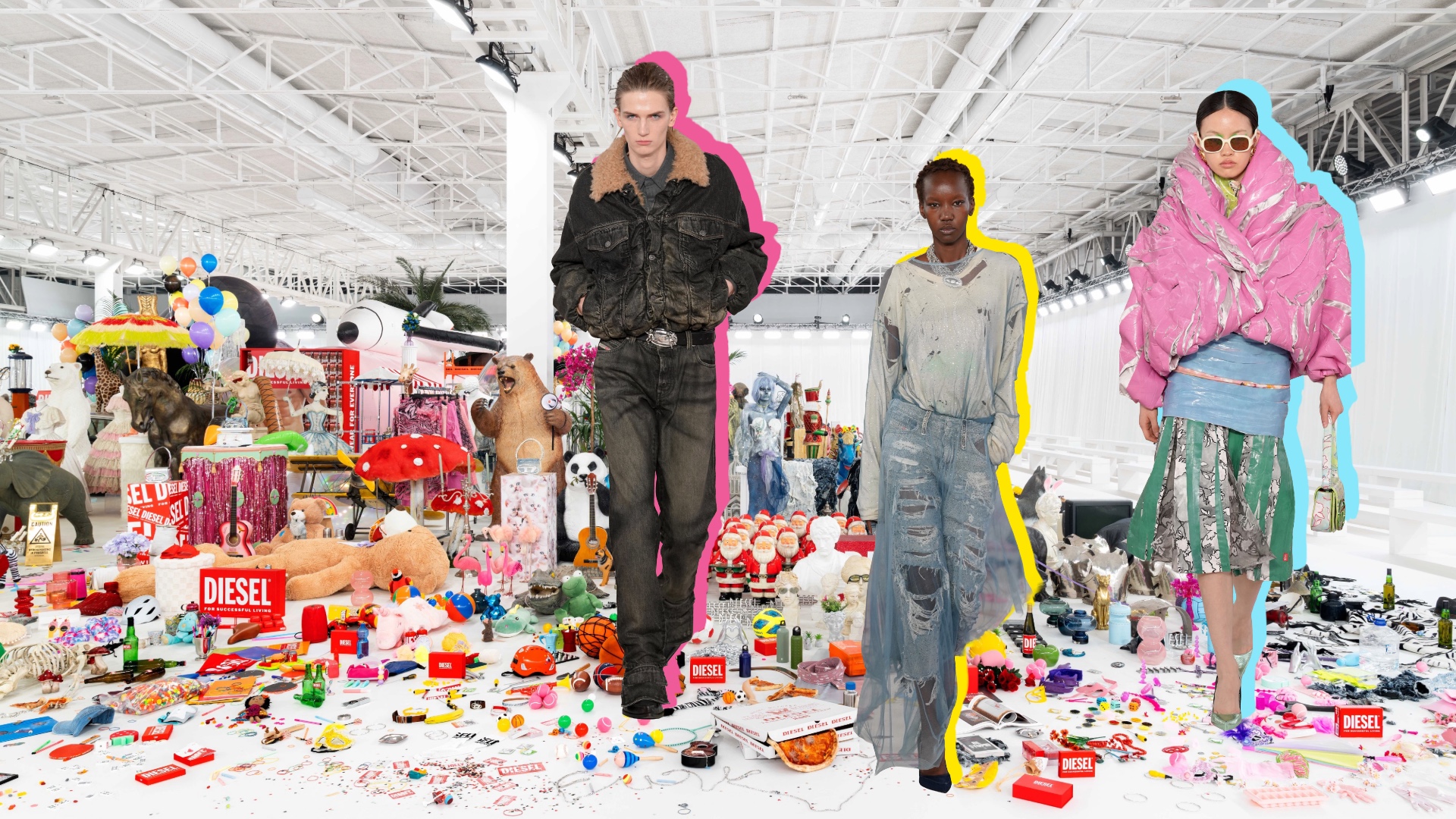
Whether we admit it or not, we all participate in a very specific ritual of getting dressed: the morning-after scramble, when we scoop clothes from the floor and shrug them on haphazardly, layering not by logic but by proximity. At Milan Fashion Week, Diesel mirrored this chaos with a collection of colliding textures, silhouettes, and proportions, misbehaving in ways that found beauty in bed-rot mornings and the untamed realities of modern life.
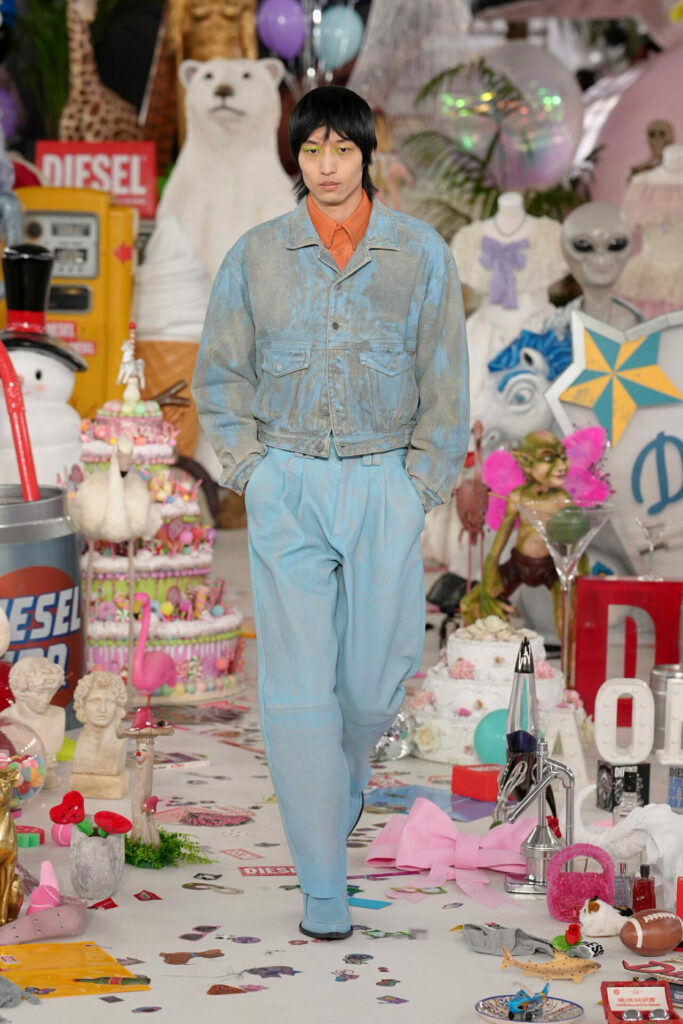
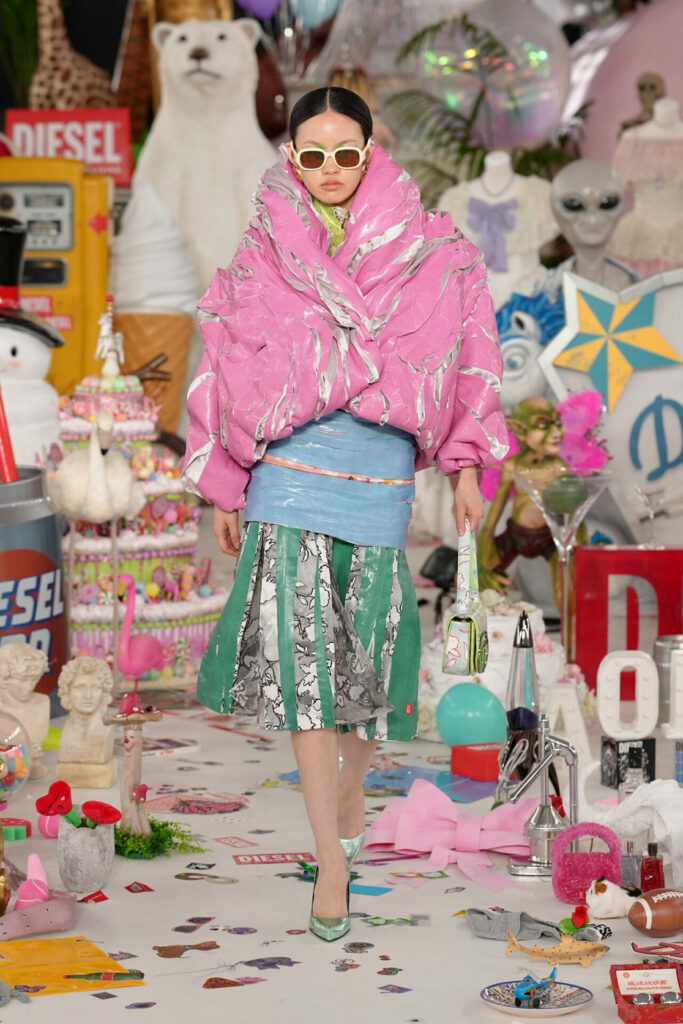
For creative director Glenn Martens, overconsumption becomes an aesthetic language. Aptly titled Memorabilia, the Autumn/Winter 2026 collection celebrated excess and accumulation, with the show space staged as a living monument to Diesel. Adorned with branded relics, archival ephemera, and logo-splashed artefacts from Diesel’s past and present.
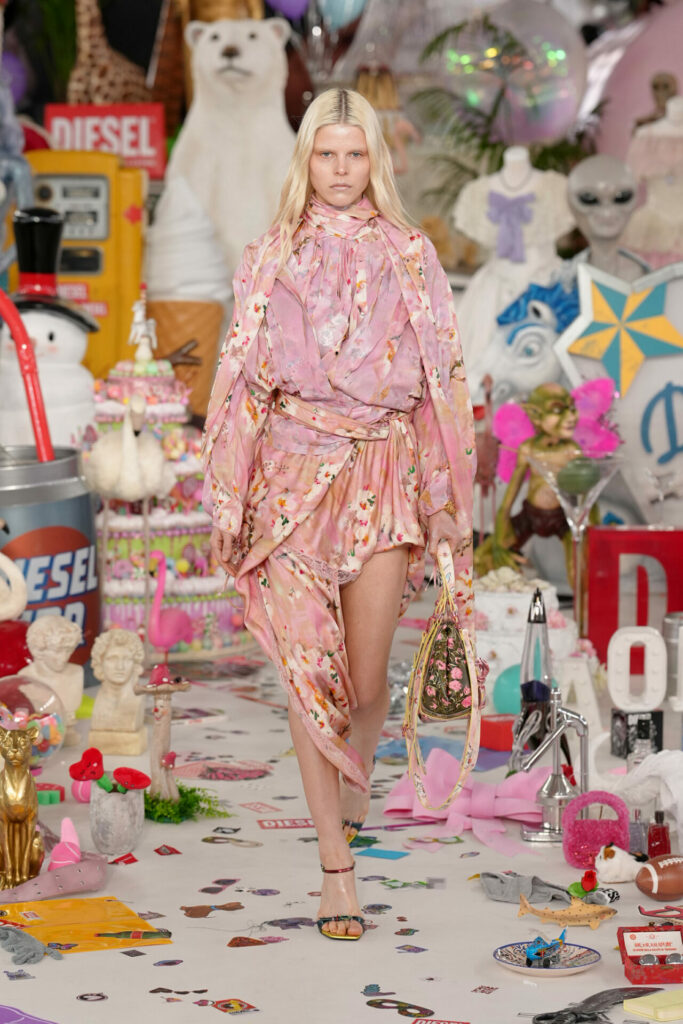
On the runway, that chaos took shape with models wearing double-layered tops, rucked and twisted as if pulled hastily over last night’s remnants; wrinkled knits appeared boiled down from supersized proportions; denim came resin-treated into permanent creases, as though the jeans had been worn all night – and all day after.
It felt cinematic. Think of Cher Horowitz standing over her riot of colour in Clueless or, more pointedly, the towering accumulation of garments in Venus of the Rags by Michelangelo Pistoletto, where classical beauty confronts a heap of discarded fabric.
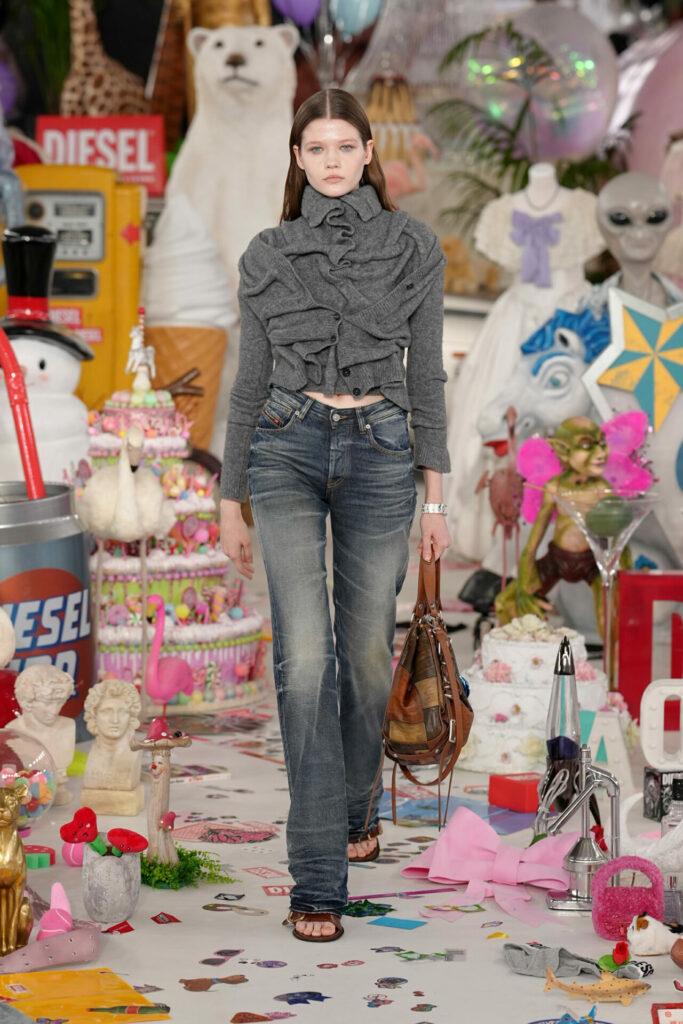
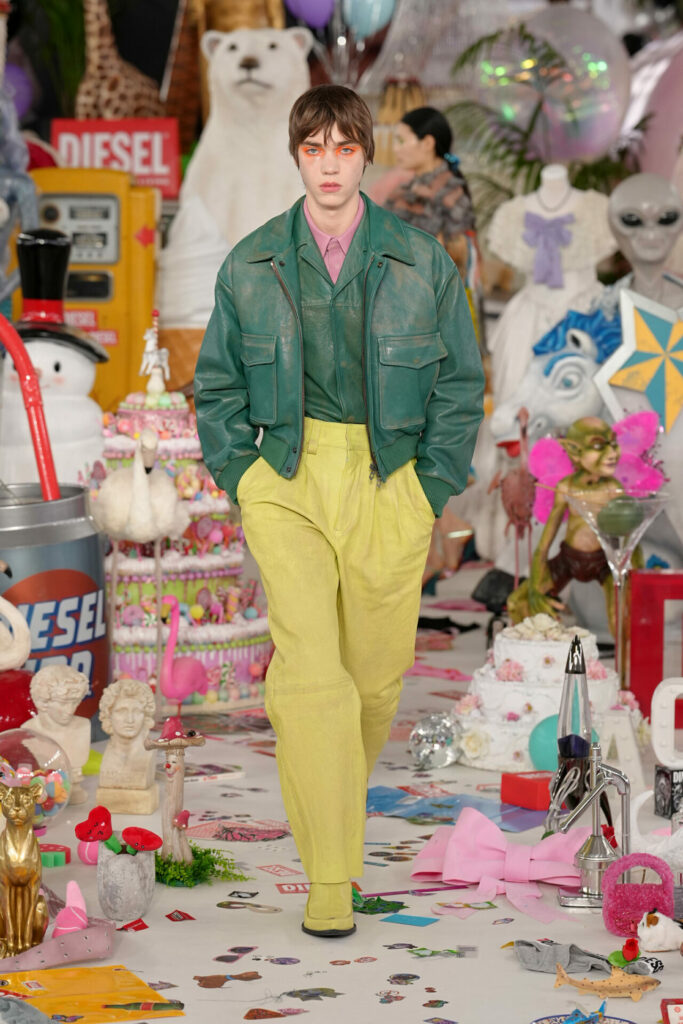
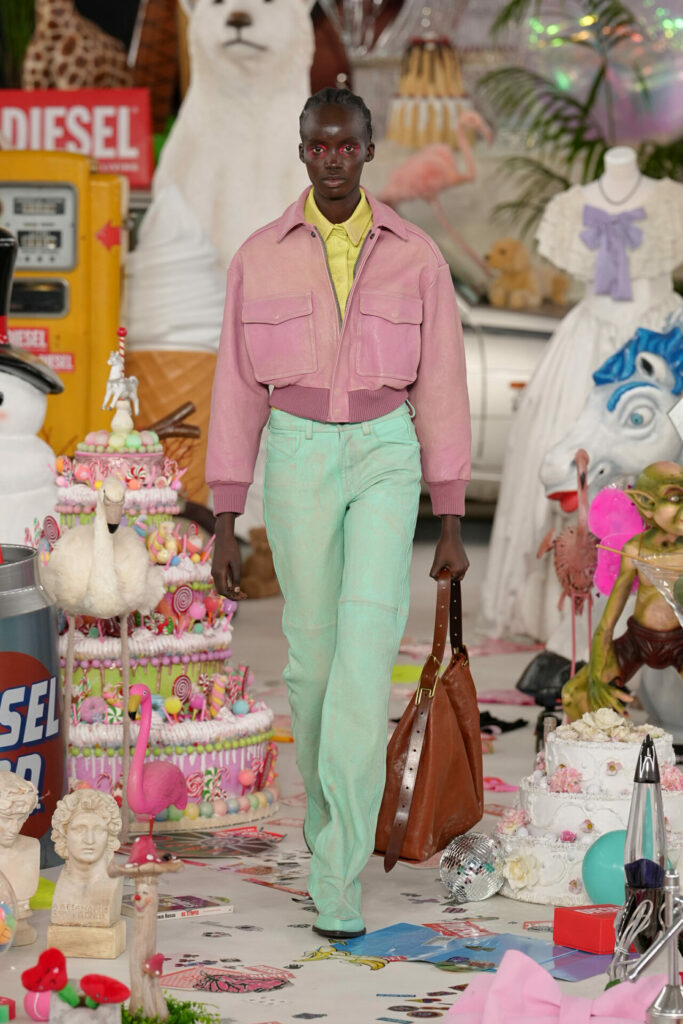
Martens described the collection as that deliciously disoriented moment: “waking up in a place, with no idea what happened last night, and you are the most glorious person ever.” Or better still: “When you sneak away from the hotel room of the person who you don’t even know, you are truly at your best.” The clothes carried that energy – subversive yet self-assured. Super-wearable, but destabilised.
Fabric manipulations amplified the illusion of disorder. Fluffed alpaca bulged as if slept in; felted tailoring looked compressed and handled; wool appeared nibbled away. Separates seemed switched on mid-motion, warped and twisted around the body as though the wearer had rolled through a stash of Diesel and emerged transformed. The palette – bubblegum brights, candy-coated pastels, toy-like gloss – added a plasticine, almost artificial optimism. Bubble glam, but knowingly so.
Yet beneath the spectacle was something sharper. By monumentalising excess Diesel held a mirror to our addiction to accumulation. And then, paradoxically, it made that excess beautiful. The chaos was deliberate; composed. The randomness was rigorous.
Today’s Diesel is about experimentation by taking what already exists and making something new from it. In celebrating the brand’s, Martens didn’t polish the archive; he rolled around in it. He twisted it, warped it, pulled it from the floor and threw it on. The result? Beauty in chaos.