
Looking Closely: The Non-fiction Work of Yunchang Zhang
In partnership with hbmka
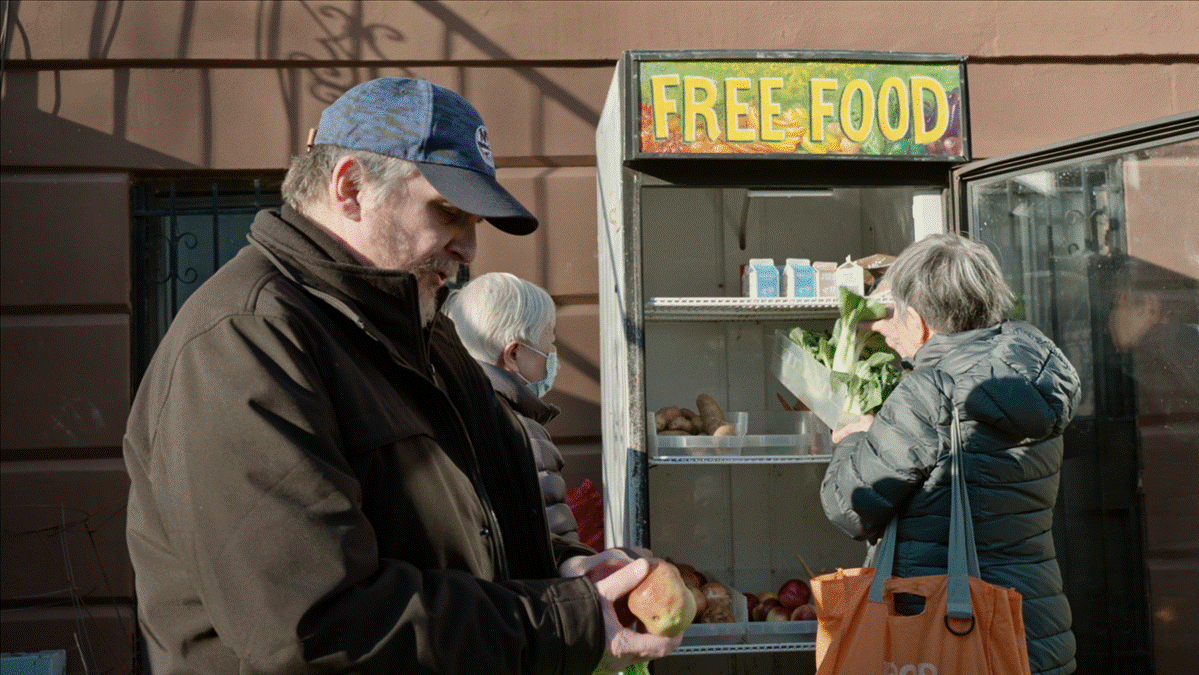
The Anarchist and The Fridge screened at FOCUS Wales Film Festival on May 9, further extending the international presence of New York-based filmmaker Yunchang Zhang’s nonfiction work. Although the film is rooted in a Brooklyn community initiative, it reflects many of the questions that run through Zhang’s broader nonfiction practice.
A Filmmaking Practice Built Around People
When Yunchang Zhang talks about filmmaking, she rarely talks about cameras. Instead, she talks about people. She talks about the volunteer hauling boxes of food across New York. The stranger willing to answer an unexpected question. The quiet moments that happen when someone forgets they’re being observed. Those are the moments that interest her most. At a time when media attention often gravitates toward faster, louder forms of storytelling, Zhang’s documentaries take a quieter approach. They slow down, linger, and ask viewers to spend time with people who might otherwise go unnoticed.
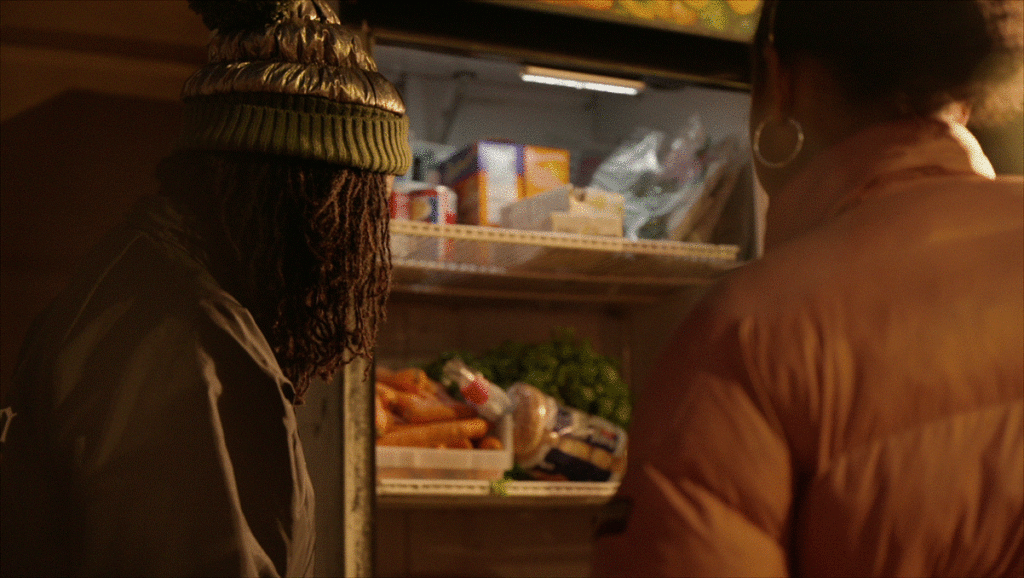
One of the clearest examples is The Anarchist and The Fridge, a film centered on New York City’s first free community fridge. The premise is straightforward on the surface. People leave food. People take food. The system works because people choose to participate. But what interested Zhang wasn’t really the fridge; it was the person behind it. As she spent time with founder Thadeaus Umpster, she found herself less interested in political labels than in the reality of the work itself, which includes food rescue, volunteer coordination, and the daily labor required to sustain a grassroots community effort.
Finding Meaning in Quiet Moments
Her documentaries aren’t built around dramatic reveals or carefully engineered emotional moments. More often, they’re built around observation. A conversation unfolds. Someone pauses before answering a question. A routine repeats itself. Nothing extraordinary appears to happen. And yet, something extraordinary does. Watching Zhang’s films, one notices how much of everyday life unfolds in these quieter, less eventful spaces. Rather than arriving with a predetermined narrative, Zhang spends long stretches of time simply listening. The relationship between filmmaker and subject is carefully built through sustained observation and trust. That patience gives her films a level of intimacy that feels increasingly rare.
The people on screen don’t appear to be performing versions of themselves. They appear to be living. That sense of authenticity has become one of the defining qualities of her work, as well as her approach to beauty and aesthetics. Before turning her focus toward documentary filmmaking, Zhang worked in advertising, where images are often carefully controlled and constructed. Documentary shifted her perspective. Instead of creating beauty, she became interested in recognizing it. A shaft of light through a window. The atmosphere of a crowded room. A fleeting expression that lasts only a second. Her films are visually attentive, but the focus remains on the people at their center.
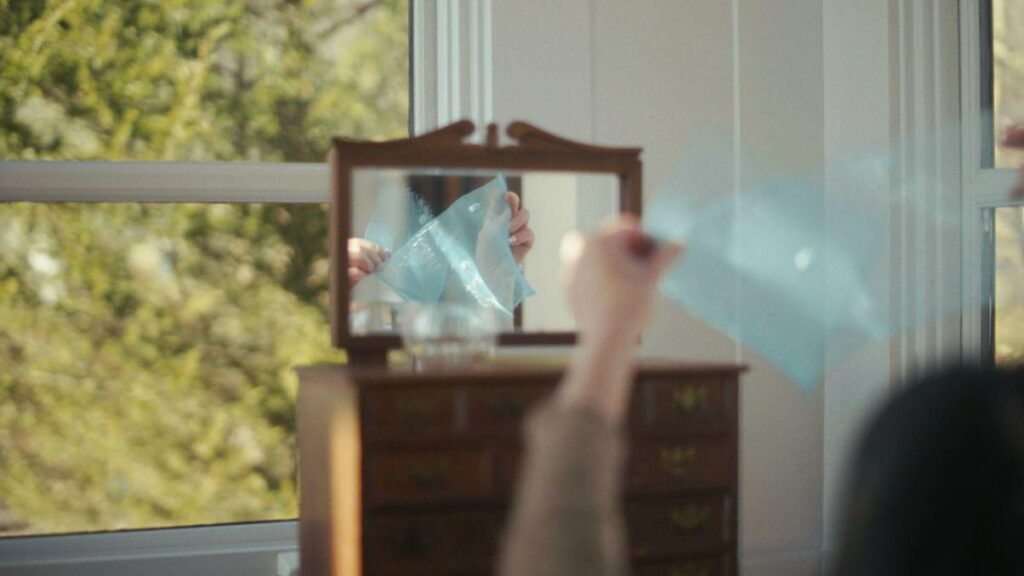
That philosophy is further developed in Paper Watch, a hybrid non-fiction project exploring grief, memory, and healing through art. The film moves beyond traditional documentary techniques, incorporating archival material, performance, and experimental imagery to explore experiences that resist straightforward explanation. Zhang uses a hybrid nonfiction form to question whether documentary must always provide answers. The conclusion that she came to was, simply put, a no. Some experiences are too complicated for simple conclusions. Some emotions are best approached indirectly. Rather than offering certainty, Paper Watch leaves room for reflection, ambiguity, and interpretation.
International Recognition and a Broader Body of Work
Zhang’s work has also received international recognition. The Anarchist and The Fridge was selected for the Academy Award–qualifying Odense International Film Festival, a well-established short film festival in Europe, and received the Global Insights Award from the Thomas Edison Film Festival, a Canadian Screen Awards–qualifying festival that recognizes works fostering cultural understanding, social awareness, and community engagement. The film has since been presented at festivals, universities, and cultural venues across North America, Europe, and Asia, including a screening and panel discussion at The New School in New York titled Art & Activism In These Times: The Healing That We Need.
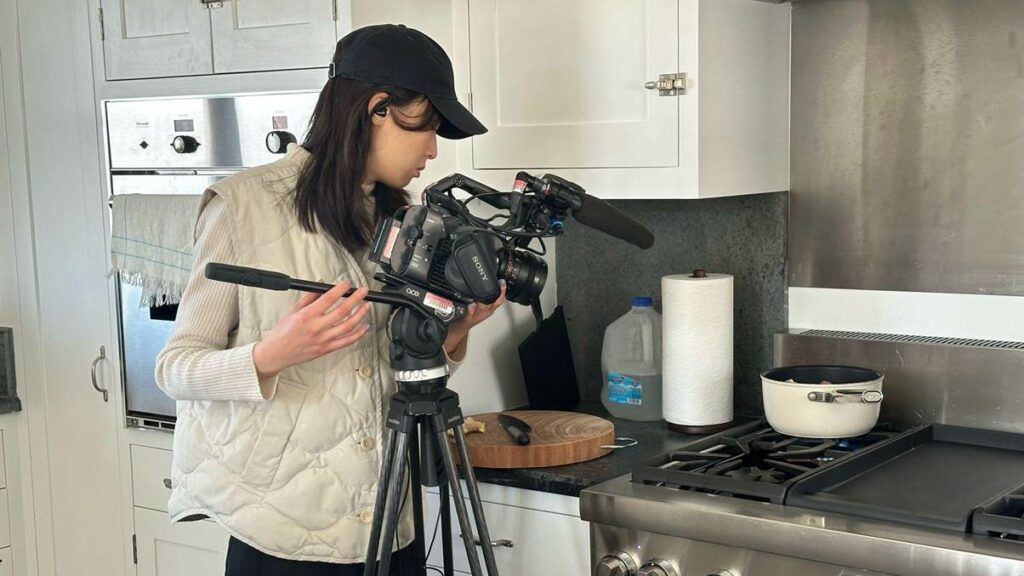
For Zhang, however, these recognitions confirm the resonance of her work across artistic, academic, and cultural contexts, while also creating opportunities for public dialogue around the communities and questions her films engage. Having lived and worked across China, the United Kingdom, and the United States, she is drawn to stories of identity, migration, and community. Her current projects continue that exploration, including a documentary following a gay man learning voguing while navigating questions of self-definition and self-expression. Whether documenting activists, artists, immigrants, or cultural outsiders, Zhang’s work consistently returns to the ways people seek meaning, connection, and belonging in an increasingly fragmented world.