
Nia Archives breaks free
For years, being Nia Archives came with a mission: champion jungle. Now, the poster girl for the genre’s renaissance is spreading her musical wings and being unapologetically herself
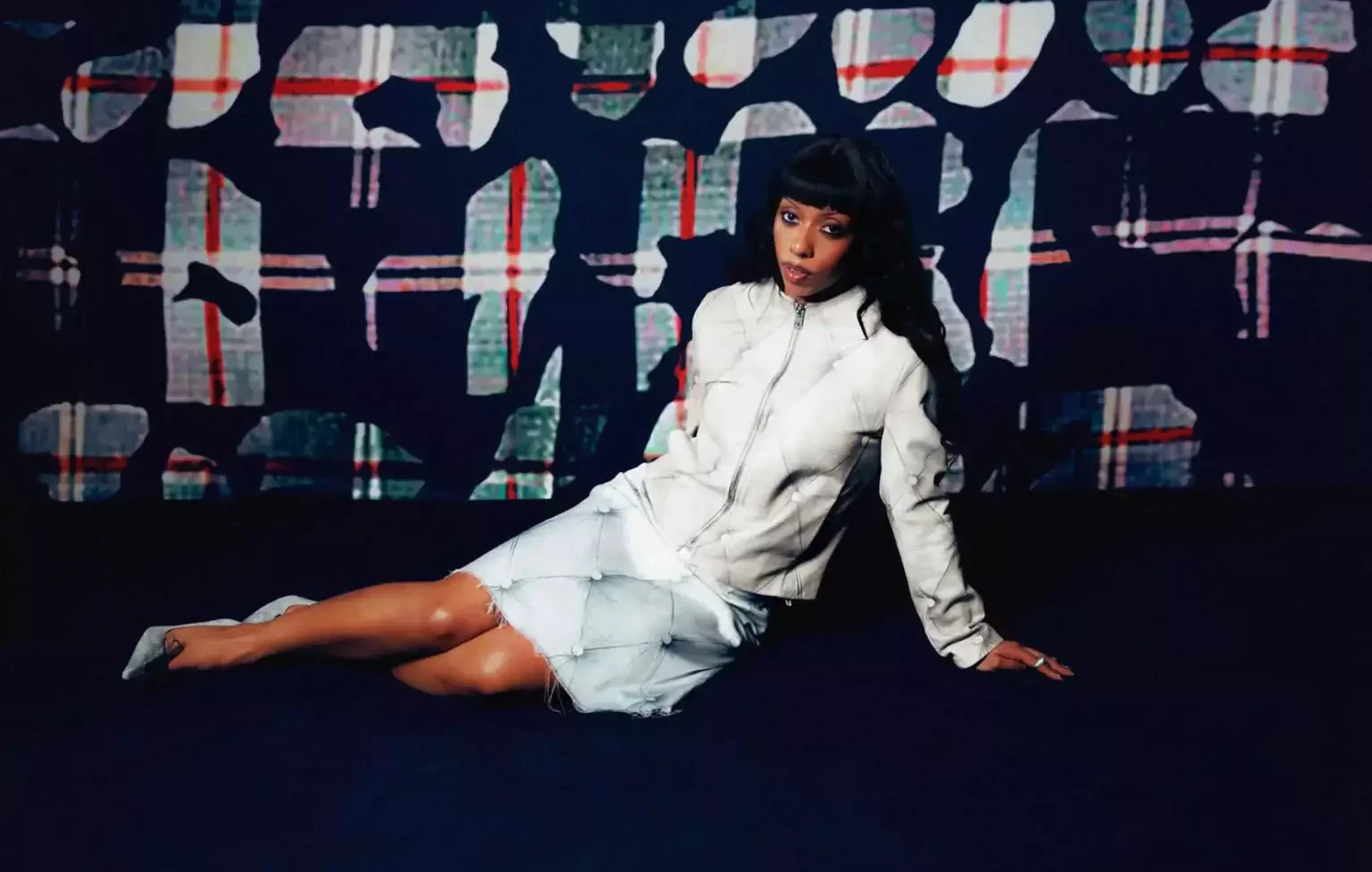
Crowded around a wooden bench outside a central London pub in the blazing heat chatting with Nia Archives is a nice way to spend a Friday afternoon. But it wasn’t the original plan: the day before, we were meant to meet at the Bradford-born star’s house to talk about her daring second album, Emotional Junglist. There was also the exciting prospect of finally settling whether Yorkshire really does indeed make the best cuppa in Britain. Instead, London’s heatwave intervened – Nia’s new portable air-conditioning unit had accidentally spent the previous day pumping hot air back into her home rather than out of it, leaving the floor “honestly hot to touch”. Her hypothetical brew sounds promising, at least: dark, a drop of milk and no sugar, a far cry from the six scoops she gleefully shovelled into mugs as a child.
I did catch the 26-year-old the night before though, as she and Jorja Smith celebrated their recent collaboration ‘Get Me Down’ in a swanky Shoreditch penthouse – the ice-cold bar giving much-needed respite from the muggy London air lingering on the rooftop. With a swarm of bodies huddling around the DJ booth, the pair performed their smouldering new duet as well as dancing along to Nia’s clattering remix of Smith’s 2023 hit ‘Little Things’. Nia comes alive behind the decks, working rooms with the ease of someone completely at home in the world she’s built. If there are nerves ahead of releasing the most ambitious album of her career, they’re impossible to spot right now.
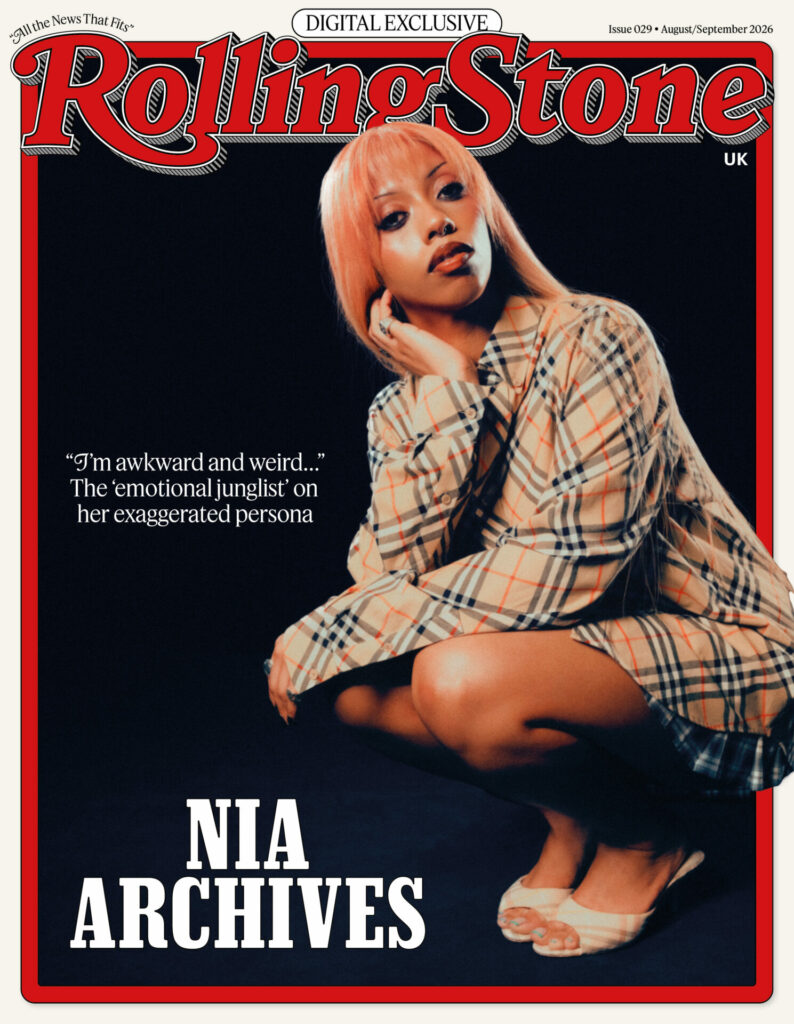
The woman describing herself over a tequila soda and a ciggie sounds markedly different to the one commanding a room full of music industry executives the previous night. “I’m not an extrovert at all, but I have to be one at work,” the artist, born Dehaney Nia Lishahn Hunt, says. “I’m actually quite awkward and weird. Nia Archives is an exaggerated version of me. It’s me, but it’s also not because I’m not that person all the time. I was really shy up until maybe two years ago.”
Over the past five years, Nia Archives has become one of British music’s most magnetic success stories. The self-funded producer who once paid for her debut single ‘Sober Feels’ with her student loan is now a history-maker in her own right: the first jungle artist to receive three BRIT Award nominations, the first in more than two decades to be shortlisted for the Mercury Prize, and a support act for Beyoncé at a London stadium show. Between festival takeovers, magazine covers and industry accolades, she’s established herself as the unmistakable face of jungle’s new generation. If Britain’s electronic scene has spent the past half decade searching for a poster girl, it found one in Nia Archives.
The producer doesn’t reject that title. If anything, she thinks she helped build it. “I think I did that to myself a bit too, [but] I had to back it,” she admits. And when jungle needed a louder champion, she rarely shied away from being one. In 2022, she lobbied for the return of the MOBOs’ Best Dance Act category with a public letter. Across the table, Nia reveals that she convinced herself that the institution would “hate me forever”. Instead, the category returned and she became its inaugural winner – a full-circle moment for someone who had attended the ceremony as a teenager. “I think it’s a great Black institution in British music,” she says of the organisation. “What [late MOBOs founder] Kanya [King] did is amazing and her legacy will go on forever. I feel honoured to be a small part of that legacy.” But, despite all this history-making with the genre, she’s equally keen to remind people that Nia Archives has always been bigger than jungle alone.
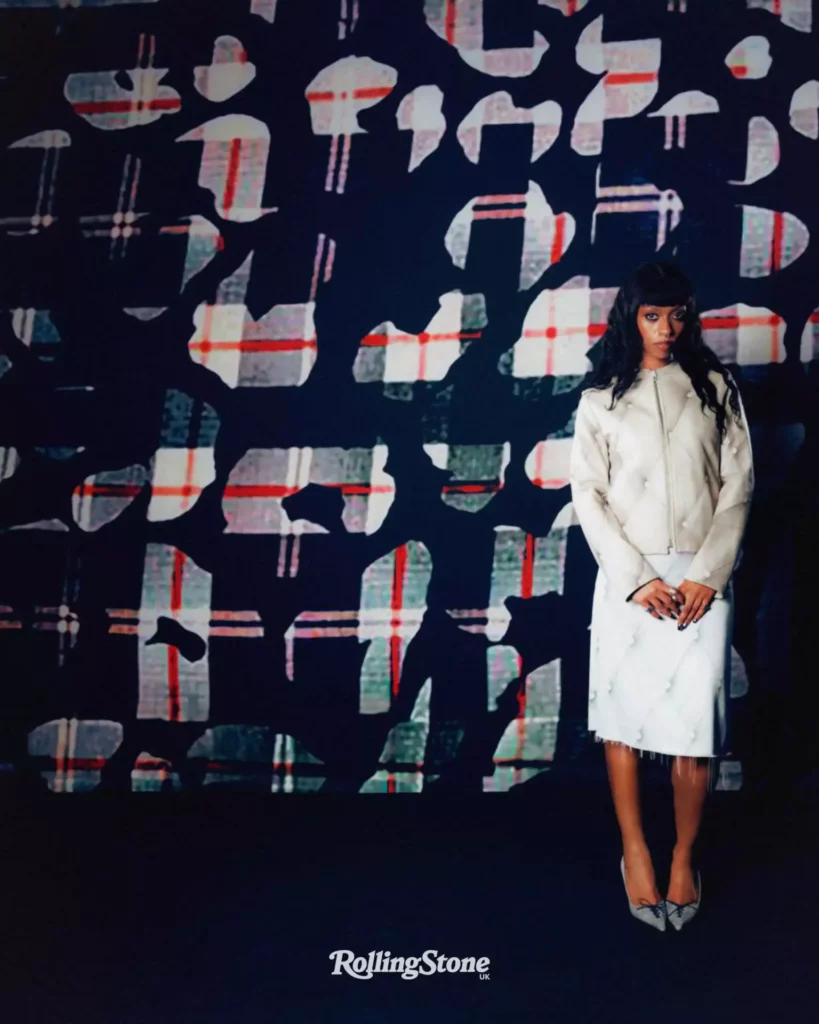
That philosophy sits at the heart of her upcoming record. Despite the title, she is quick to point out that this isn’t really a jungle record. “It’s called Emotional Junglist, but it’s not a jungle album,” she says. “It’s an alternative record.” She starts reeling off the music that shaped it almost instinctively: Madonna’s Ray of Light, Blur, Pulp, Saint Etienne, Massive Attack. Jungle still dictates the pulse – the breakbeats, the basslines, the skeletal framework of the songs – but almost everything else has been given permission to wander. “With jungle, I’m inspired by the drums and the bass production and the structure,” she explains, “but I’m not necessarily inspired by the synths. I take way more inspiration from alternative music, guitar music and trip-hop.”
As a music listener and fan, Nia Archives has long admired artists who refuse to sit still. “Madonna did that so well across all her eras – always pioneering, always asking, ‘What’s next?’” she says. “I’m really inspired by people like Madonna and Björk, who keep innovating. [FKA] twigs too, she’s always kept it moving.” Now, Nia is ready “to fuse genres, find the next combination of the things I like – that’s what excites me at the moment.”
“It’s called Emotional Junglist, but it’s not a jungle album. It’s an alternative record”
The music itself isn’t what worries her. Putting it out into the world is. “I’m really worried,” she admits with a laugh. “People are expecting 15 straight-up jungle tracks. I’ve done that already. I hope people allow me the grace to just try some shit.” For an artist who spent years loudly staking her name on jungle, there is an irony in now having to convince people to follow her somewhere else. The question is no longer whether she can make jungle bend to her imagination, but whether her audience will trust her without knowing exactly where she’s taking them.
That freedom extends beyond the production. She has always written candidly about her life, but admits she once used the frenzy of her music to obscure just how much she was saying. “I used singing more as a musical tool than a vocal showcase,” she says. Even on her debut album Silence Is Loud, widely praised for its emotional openness, she was wary of revealing too much. When its raw title track quickly became a favourite among her team, who wanted to make it a focus of the campaign, Nia pushed back. “I was so scared,” she remembers. “I was like, ‘It can be on the album, but I don’t want it to be the focus.’” This time, there is nowhere near as much distance between the woman living through these experiences and the artist singing about them.
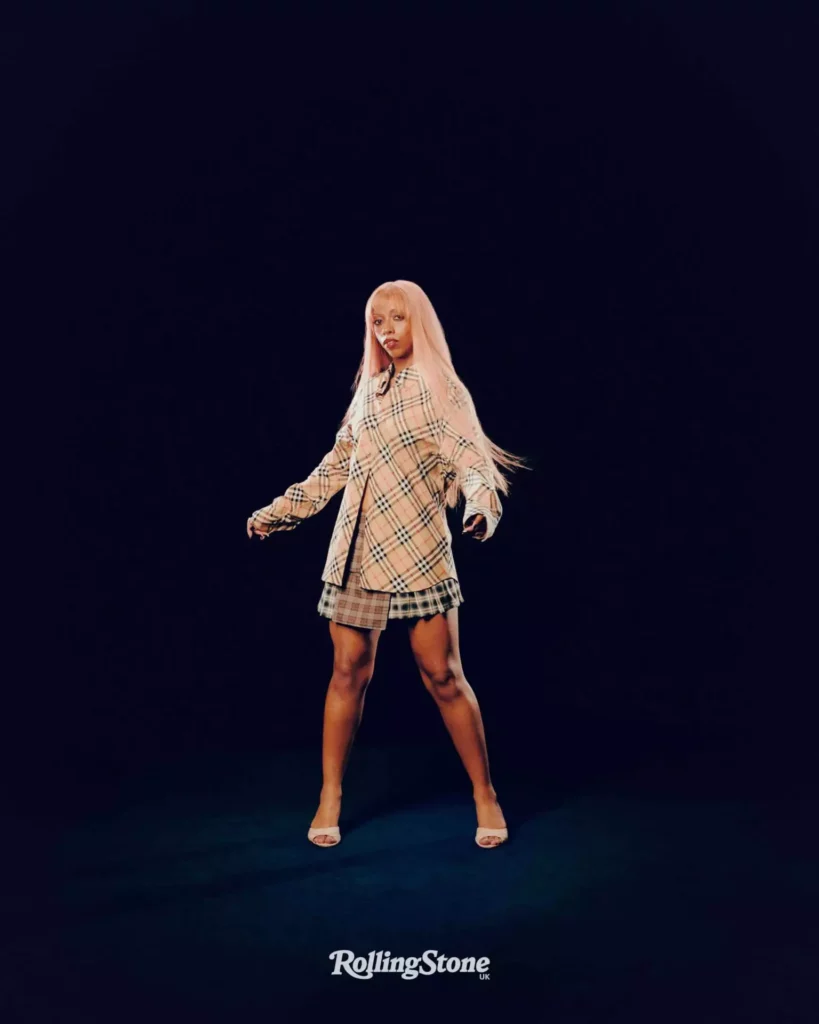
Part of that newfound candour comes down to timing. She wrote Emotional Junglist throughout a year in which she fell madly in love, had her heart broken and, in her words, endured enough “canon events” to send her emotional compass spinning. “I feel like I’ve experienced every emotion under the sun over the past year,” she laughs, joking that it only cost her “peace of mind and sleepless nights.” At 26, she’s also beginning to understand those experiences as part of a bigger shift in her own life. “Being in your mid-twenties, you’re figuring out who you are,” she says. “You’re exploring your sexuality, you’re falling in love, falling out of love… I think people kind of get stuck in girlhood, but really and truly, I’m 26 and I feel like I’m entering womanhood.”
Emotional Junglist bottles all the mess that comes with that transition. Unlike its predecessor, which largely captured the anticipation and release of the rave itself, the musician calls this album “the post-rave experience”: the morning after, when the music has stopped and romance, grief, lust, humiliation and relief are left to jostle around in your weary head. “Post-rave is when you’re reminiscing on all these experiences you’ve had – negative, positive, euphoric,” she says. “We’re living in a post-Brat society. Brat changed the entire music industry, and I think people have chased that sound and that vibe, that rave party girl, ‘360’ energy. No one can replicate what Charli XCX’s done, so to keep trying to do this rave thing when actually we’re living in a post-rave society…” she says, far more excited about unexplored territory than capitalising on a trend. “That’s just how I view music at the moment.
“To be an emotional junglist is to feel everything and nothing all at once,” she continues. “To be calm yet chaotic, sane yet manic – up, down and sideways.” That vast emotional spectrum demanded more space than breakneck drums alone could give her. The music had to stretch to fit the person she’d become.
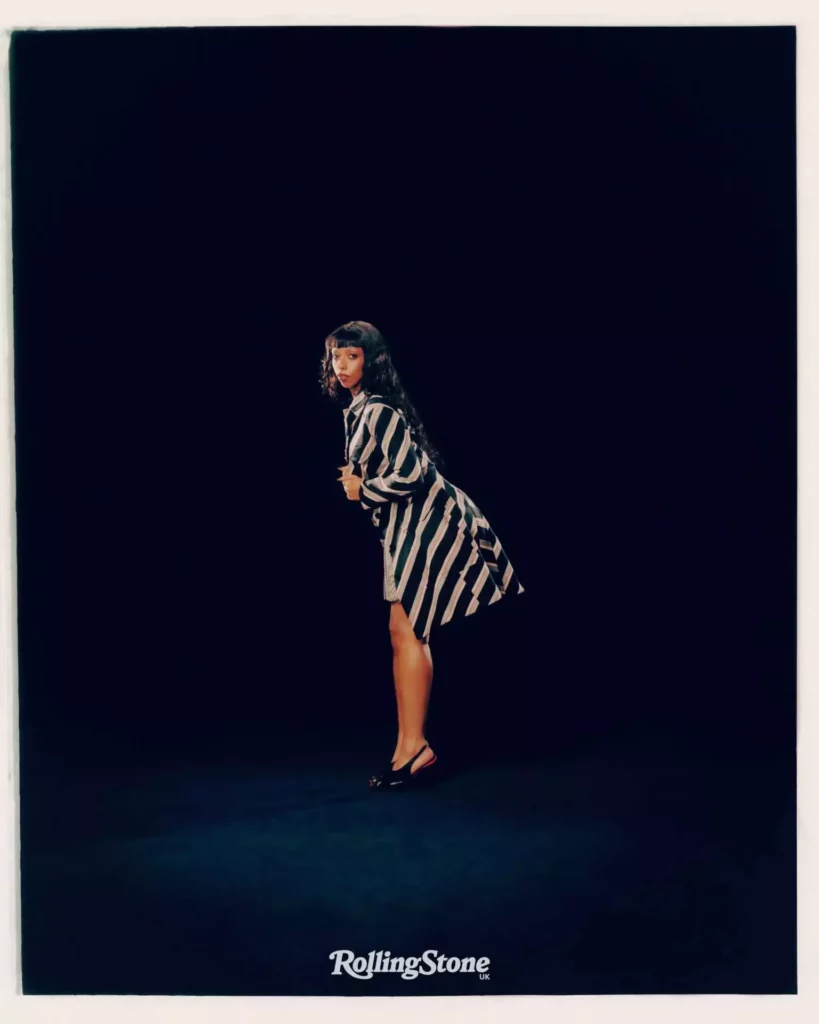
Entering womanhood has also made the producer think more closely about whose perspective her music embodies. She often talks about wanting to “feminise jungle”, but her ambition stretches beyond simply seeing more women behind the decks. “This album has really been from my POV as a woman in her twenties,” she says. That thinking extended to the world around Emotional Junglist, where she assembled an all-female team of creative directors and photographers. “A woman will just see things a certain way that a man won’t,” she explains. “It was really important to have that eye on it.”
Still, she is wary of treating womanhood as another neat identity she has to perform. “When I was younger, I didn’t even really see myself as a woman,” she admits. “I was a bit of a tomboy. I didn’t feel connected to my womanhood at that time. But that’s also on the spectrum of womanhood – I don’t think womanhood is one thing. Just because I’m wearing a miniskirt now doesn’t mean I’m more of a woman than I was then.” At this age, she seems less concerned with finding the correct way to inhabit womanhood than recognising all the ways she already does. “It’s always changing, always evolving,” she says.
That evolution has also required her to loosen her grip on the way she makes music. The teenager who first taught herself Logic after growing tired of producers messing her around built a career on self-sufficiency; even Silence Is Loud was largely made in the solitude of her bedroom. “I’m a massive control freak,” she laughs. “It’s really been about learning to trust other people. Even writing in the room with other people, I didn’t used to like that. I felt anxious making music in front of others.” On Emotional Junglist, however, she opened the door wider than ever before, welcoming Jorja Smith and Sampha onto the record and working alongside James Ford, Julia Michaels and Ethan P. Flynn. “I actually enjoy it now,” she says. “Other people have really great ideas and I’m excited to hear what they think. I think it’s helped me grow as a person, in terms of not being such a control freak.”
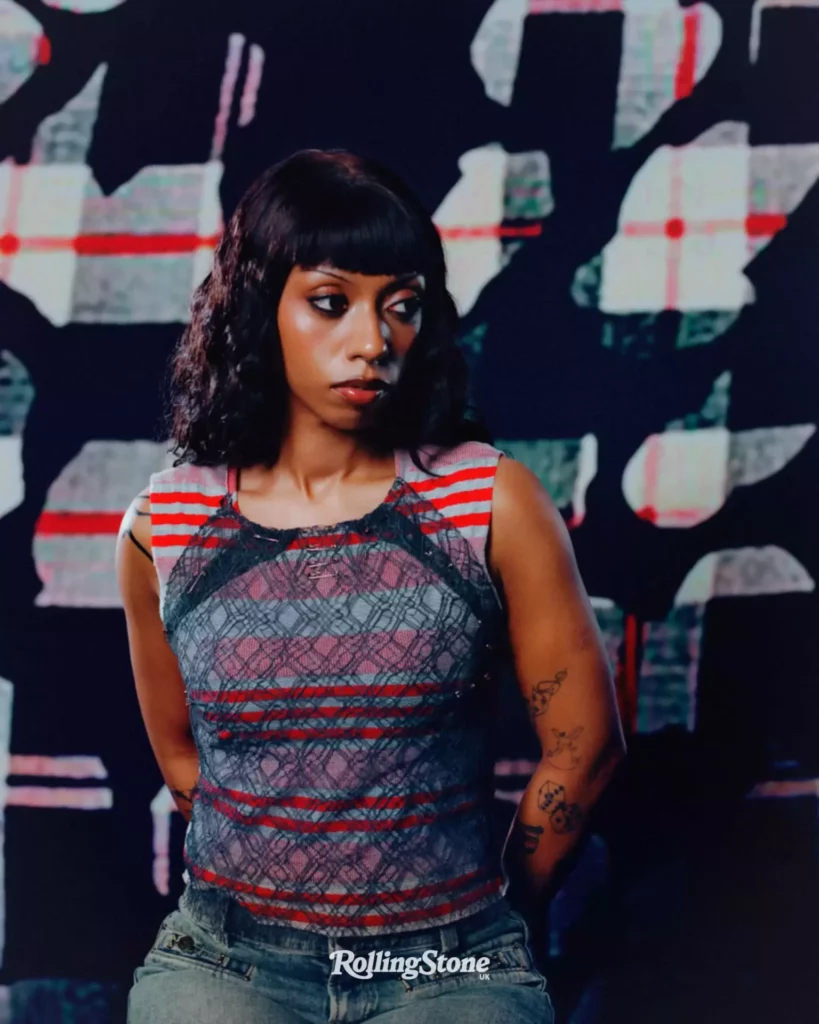
Learning to share her creative process is one thing, but she is also increasingly interested in building something that doesn’t revolve around her at all. Up Ya Archives, which began as a party series before expanding into a label, has become her clearest answer to what comes after being jungle’s poster girl. She has released around 10 records by a new generation of junglists and wants to expand into workshops, while a recent takeover at the V&A East Museum brought babies, veteran ravers and young producers together for talks and community events. “It’s a business for love,” she says. “As an artist, you get a bit self-obsessed. You’re always talking about yourself, making music about yourself. It’s good to do something that’s actually about other people.”
For Nia, that work is less about furnishing her reputation as an activist than repaying a debt. She is quick to point towards DJ Flight, SHERELLE and Jaguar as people “doing the groundwork” but is equally clear that success has given her a responsibility to reach backwards. “A lot of people take from the culture and they never give back,” she says. “A lot of this music comes from marginalised, working-class communities. It doesn’t feel right for someone like me, who’s had a lot of success through jungle and dance music, to just take and never give back to the community that basically gave me my career. As much as you rise, you have to remember how you got here and bring people with you.”
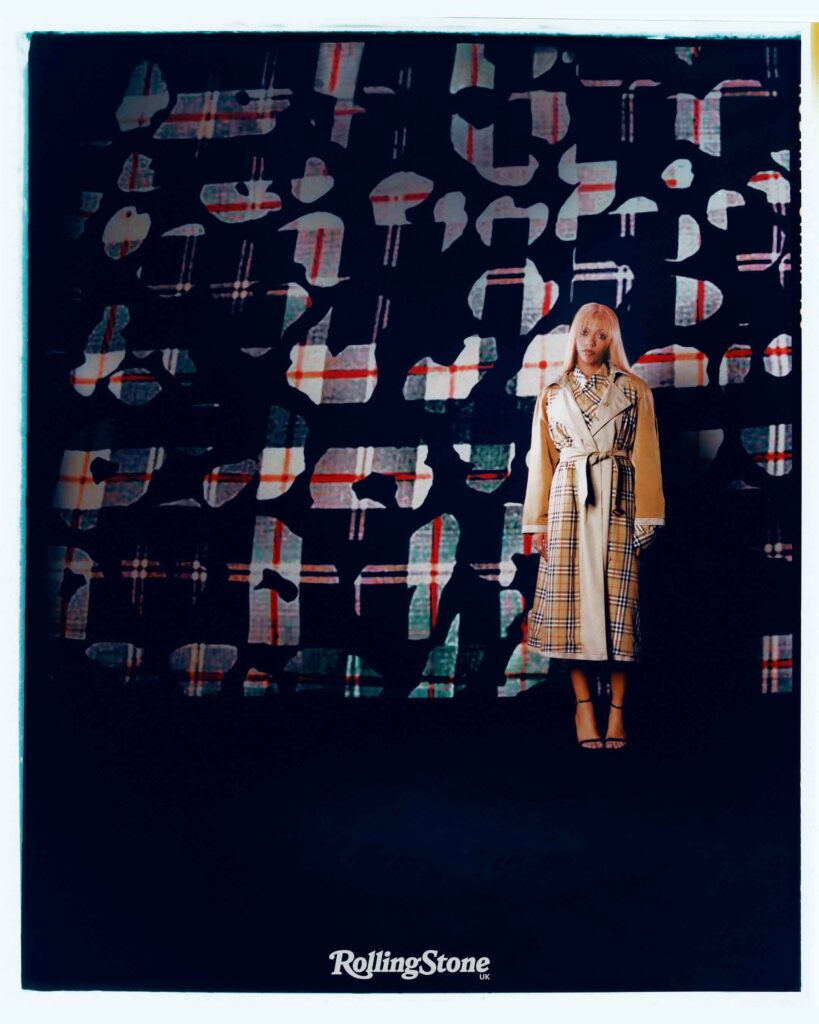
There is plenty more that Nia Archives wants for herself. She insists she hasn’t yet made her best music, while directing the ‘Get Me Down’ video has left her hungry to make more films and art, while ghost-producing and making beats for rappers are already on the wishlist. “I don’t feel like I’ve done anything yet, honestly,” she says. “I’m very grateful for what I’ve done, but I don’t think I’ve done what I’m capable of.” The finish line, evidently, is still moving. What has changed is her understanding of who she needs to be while chasing it.
“All Black people are not the same and people are allowed to have their different interests. That doesn’t erase your Blackness”
For years, being Nia Archives came with a mission: champion jungle, fight for its recognition and make space for the Black women too often left out of its history. None of that has disappeared. But she no longer believes representation requires her to squeeze herself into another fixed idea of what a Black woman, junglist or Nia Archives should be. “I’ve always just thought that all Black people are not the same and people are allowed to have their different interests,” she says. “That doesn’t erase your Blackness. It just means that you’re an individual that likes your own stuff.” Perhaps, after years of carrying a genre alongside her own ambitions, Emotional Junglist is Nia Archives discovering the power in that individuality. “Just be yourself,” she says. “Because that’s really all you can be at the end of the day.”
Taken from the August/September issue of Rolling Stone UK, out July 30. Pre-order it here.