
Meet Henry Coke, the fascinating new songwriter reckoning with his faith
The London-based musician’s stunning debut album, ‘Let It Set Us Alight’, sees him reflect on his upbringing in the church, and holding onto faith outside of it
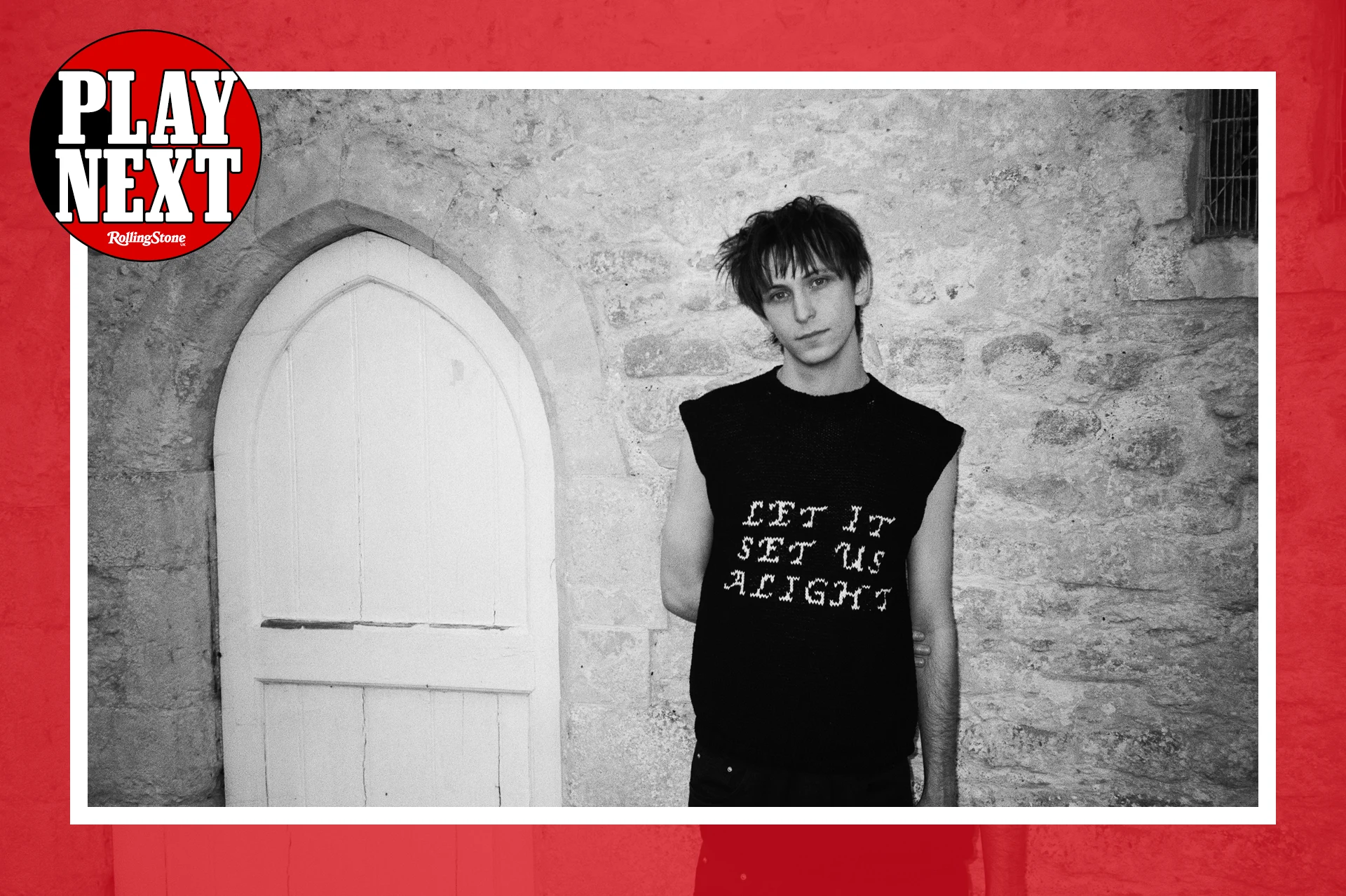
For young songwriter Henry Coke, the religious music he’s always connected to most has been that which provides more questions than answers. Born into a family of vicars and church leaders going back generations, the now-24-year-old spent his childhood seeing a life mapped out for him. Instead, he moved out of home and away from the church, starting to write songs and re-examining his faith outside of the institution.
“I have a real distaste for worship music,” he tells Rolling Stone UK. Why do all worship bands sound like U2 or Coldplay? I hate it.” Instead, he explored his evolving faith through the likes of Sufjan Stevens and Leonard Cohen, whose songs on the matter are far less prescriptive.
“I have been searching for these kinds of songwriters who write about religion in a non-sacred way, and are completely disconnected from religion world,” he says, with Cohen hitting a particular sweet spot. “How he writes about God is more like a worship song to me than a worship song. I see God in those songs way more than a song that’s intended to be that.”
This ongoing excavation of his childhood and religious beliefs, as well as the universal ups and downs of growing up, form Let It Set Us Alight, Coke’s stunning debut album. Completely self-produced, it introduces a songwriter taking cues from Stevens, Bon Iver and more, but with a powerful and unique voice of his own.
Read our interview with Coke and listen to his music via our Play Next playlist on Spotify below. Let It Set Us Alight is out on 30 October via 5db, and you can watch the video for new single ‘Regret (You Make Me)’ below.
Let It Set Us Alight is themed around the exploration of your faith – did you know that at the start, or did it become clear as you kept writing?
I was just having fun writing music. I went to uni to study music, and I wrote some songs for that. I was realising that I wanted to write about this battle with understanding faith and religion. Finding peace in the unknown is how I picture the album and the music. I was just writing and writing, and then realised that all these songs were thematically connected. I wasn’t intending to write an album to begin with, but it just ended up being 11 songs that all fit together and follow this chronology.
When you grow up religious, the idea of the unknown away from the church can be incredibly scary – when did you know that you wanted to move away from it?
My whole family are all church leaders and vicars, so it’s a generational thing as well. I completely get the weird feeling of, ‘Oh, I actually can decide if I want to do this’. It’s a weird, weird sensation. Moving out of my family home was the first time of feeling like I can make that decision.
When did the idea of writing about this process come into focus?
I don’t think I initially wanted to write music about it. I produce the music at the same time as writing – it’s part of my writing process. I’ll create the music and then start writing lyrics over the top of it to fill out the space so I don’t forget a melody. I’ll start making up words, and then I’ll realise that I’m subconsciously singing about something. It always ends up being about something connected to drifting away from the church, whether that means religion itself or the institution of the church. I think my belief is too fluid to put a word on it; some days I believe, some days I don’t. It’s a weird one, but one that’s really nice to put into the music and unpack and still find a way to express this feeling without going to church.
Your songs are so intricate and interestingly composed – is there a template for how each one begins?
It’s different for every one. Sometimes I’ll play a song on the piano, and I have to finish a song if I start writing one otherwise it’s lost. Sometimes it’s the other way around. I’ll get excited by a synth sound or a guitar sound or a sample and then take the themes from that. There’s a song [on the album] where I’m screaming, called ‘Lost in the Fire’ – it’s my angry song on the album. That’s all influences from this baritone guitar. It was the first time playing a baritone guitar at the time, and now that’s solely what I play. That low, deep guitar sound was like, ‘Oh, this feels like a different emotion to a normal guitar’. And to me, at that time and in that moment, it was anger.
You studied singing at university – did that develop your lyrical voice too, or is that something you’re trying here for the first time?
I wrote some songs with a friend at school, trying to make these psych songs that were nine minutes long. I struggled with lyric writing at that point, and the thing I struggle with the most [even now] is lyrics, because I want songs to have meaning. I don’t like songs where it’s like, ‘Oh I write lyrics for the sound of the word’. After uni, I was really going heavy into wanting to read books and felt like that would make me a better lyric writer. I was reading a lot of poetry and taking words from poems and then writing the song off a phrase.
Are examples of that on the album?
Yeah! There’s a few where I was skimming through a poem book. I’d point to a random line and be like, ‘OK, cool. I have to write from these three words’. There’s a couple of songs on the album where that’s literally how the lyrics started, and then I would go off from that.
I do hear echoes of your time in the church on the album, especially the backing vocals…
That’s how I learned to sing to begin with. I would sing in church every Sunday, and then I also did some choral stuff and sang a lot in choirs – that’s a big element of my music. I also wanted to play guitar to be a bit cooler, so I learned guitar. Then I became [involved in] more of the contemporary Christian music world, but didn’t like that as I got older.
I think you can hear worship music in my music, and I like to leave the lyrics of the songs ambiguous enough that you can take it both ways. There are Christians who come up to me after hearing my songs and thinking it’s more of a worship song, and they see God in that and see worship in that. I’m not intending that, but I like that that it can be taken both ways. I’m moving away from God, or I’m moving towards God. Then there’s the choral parts in the backing vocals. I love that that’s always looming there. I imagine those backing vocals as the looming thought of God that’s always there, this reverb that’s hidden in the back of everything. It’s the niggling feeling.
It must be a rewarding and interesting process to work out what you want to take forwards from this period in your life, and what to leave behind?
It’s super rewarding, but it’s tough to do too. You grow up thinking that life is quite a binary thing, but it’s not at all. Then you can move on from that. It’s hard to unpack that sometimes, but it also has its pluses. It’s a great influence for art and music. I think it’s great that I can take from this thing, but I don’t want to stay just writing about this forever. It’s still an ongoing thing. It’s quite nice to just sit in that feeling, and once you’ve unpacked one thing using a song, I can then move on to the next thing and unpack that. I can go through every minute detail [of my life] and use the songs to do that.