
Meet Madra Salach, the band putting their own powerful twist on Irish folk
Madra Salach are proving to be a major force within modern Irish folk
By Nick Reilly
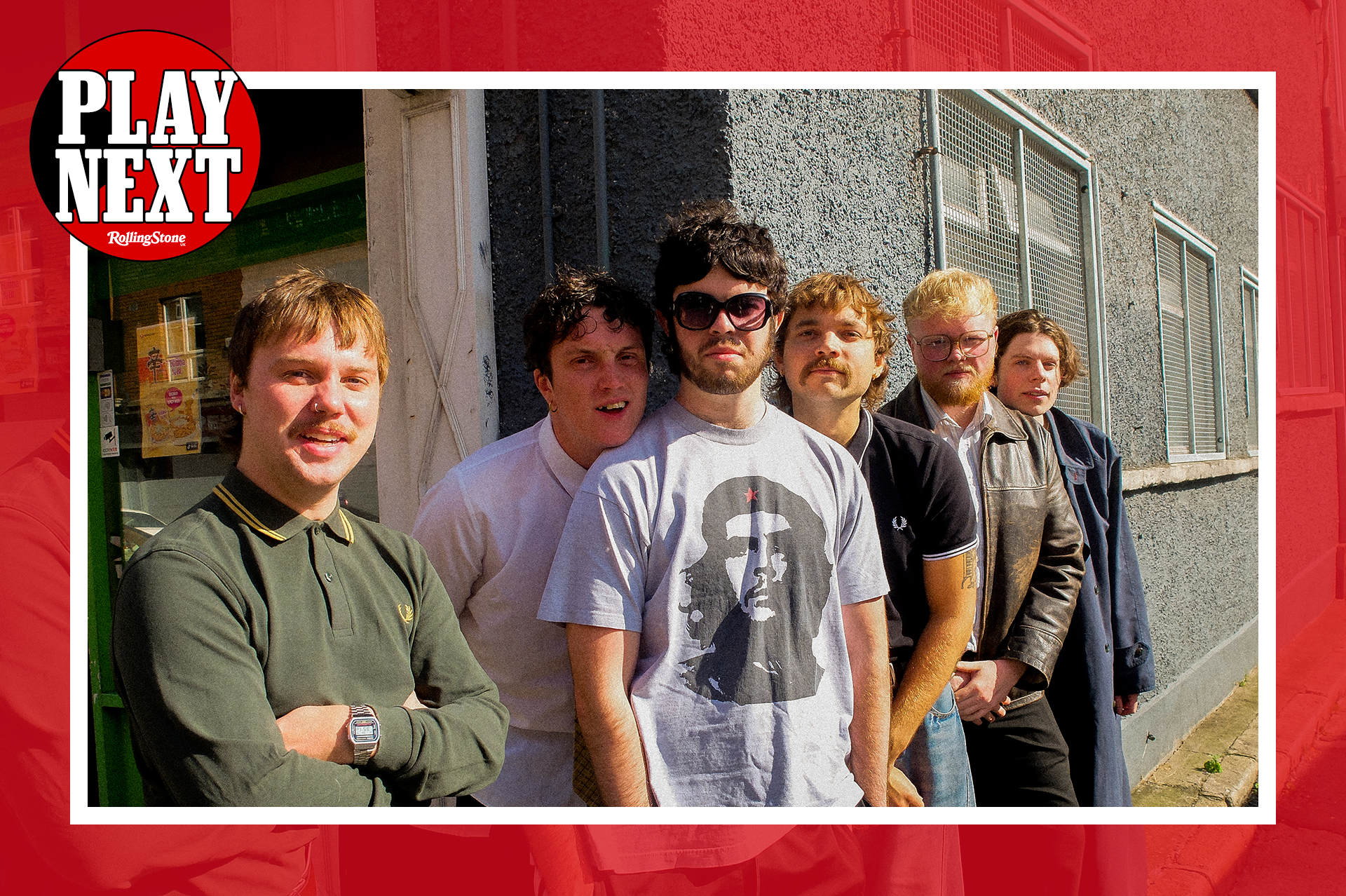
“I would implore people to come and see us live if they can,” Madra Salach vocalist Paul Banks tells RS UK during our first ever interview with the Dublin risers. It’s easy to understand what he means. Their debut EP, It’s a Hell of an Age, deals in traditional Irish folk, but it’s their shows where moments of experimental distortion and synth come to the fore and allow this group to become a brilliantly fresh proposition.
Comparisons to other modern forebears like Lankum may have followed them, but songs like ‘The Man Who Seeks Pleasure’ show that they are capable of creating their own timeless mark on the genre too.
All that, and, as their tour poster points out – the very real need to eschew a support act for their London show in order to accomodate Ireland’s all important World Cup qualifier next month.
Just like the recent Troy Parrott-aided success of Ireland’s national team, Madra Salach’s completely sold tour proves that they too are truly aiming for the big leagues.
Read our Play Next interview with Madra Salach and listen to their music via our Play Next playlist on Spotify below.
Hello, Madra Salach! How’s things?
Paul Banks: The last year has been mad, because it’s just been steadily ramping up. We took our time, because there’s always the fear that people’s interest is going to wane and you’ve missed your shot and you should have rushed something out. But I think we’re all really glad that we didn’t do that and then we took the time on the EP. To have it out now and have it on lots of ears listening to it, it’s really rewarding.
Madra Salach, for the uninitiated, translates to Dirty Dog. What’s the thinking there?
I wish there was some great story about it, but to be honest I formed the band and had a long list in my Notes app of potential names, some of which will never see the light of day. They were so ridiculous, but I wanted to include Irish in some capacity and I just liked how that name looked and sounded. It’s visceral.
Your sound is rooted in traditional Irish folk music. How did you first discover that sound and explore it for the band?
The thing that I always stress is that none of us come from traditional Irish backgrounds. In Ireland, there can be real folk dynasties who play concertinas and fiddles from a really early age, but none of us come from that. My introduction was The Pogues when I was a teenager and that was my gateway drug. In terms of this project, we were listening to contemporary folk revivalists like Lankum and John Francis Flynn.
So it feels like a particularly exciting time to be part of Irish folk then?
It’s exciting to feel like you’re in the middle of it, but even more so to feel like we are in any way participating in it. There’s a wealth of folk [music] and more Irish people are familiar with the mainstream ballads that you might hear being sung in pubs. But the more we got into them, the more I’d be put onto more niche field recordings and labour songs which were really interesting. We’ve got ‘Murphy Can Never Go Home’ on the EP, which was written in the 60s about the reality of Irish labour abroad. The fact there’s any sort of appetite for that is surreal, especially over in London or playing in the Netherlands.
There’s a timeliness to that song too, though. Those themes of yearning for home and the Irish diaspora are as relevant as they ever were.
Yeah, totally. I think that young Irish people are still emigrating in their droves, bands or otherwise. It certainly doesn’t have the bleak context of the early 20th century when it was linked to the famine, but there’s still people leaving Ireland who would rather stay. There is a sadness in that.
Paul, you worked as a care worker before going full time with the band. What was that experience like?
I’ve stepped away from that now, but I was doing it for the bulk of last year and when we were working on this EP I was working as a special needs assistant in a school for students with quite complex needs. A lot of those students who will likely never be able to live independently, but you try to give them as much independence as you can.
It was a privilege to do a job like that and be a part of those students’ lives. But it also allowed me to tap into my emotions in terms of writing and I didn’t have to dig too deep into my emotions to find something that was moving me on any given day.
I’ve noticed that the London date of your tour poster states that there’s no support act because it falls on the same day as Ireland’s all-important World Cup qualifier against the Czech Republic. That’s amazing…
Yeah! We’re going to be score in the first five minutes and then park the bus for the rest of the game. All of us are born a decade, if not more, after Italia 90 and 36 years later it’s still talked about like it was a spiritual event. There’s such reverence from the people that lived through it.
And finally, what does a Madra Salach live show look like?
Without sounding like overly self-assured, I would implore people to come and see us live if they can. It’s what I’m proudest of about the band. I have such faith in our live show. We’ve spent so long doing it, working at it. The lads are incredible musicians, and I’m gorgeous!