
Meet Wesley Joseph, the Walsall polymath releasing a timeless debut album
“I always try and punch above my weight class,” Joseph says as he prepares to unveil his sonically varied and brilliantly ambitious first LP
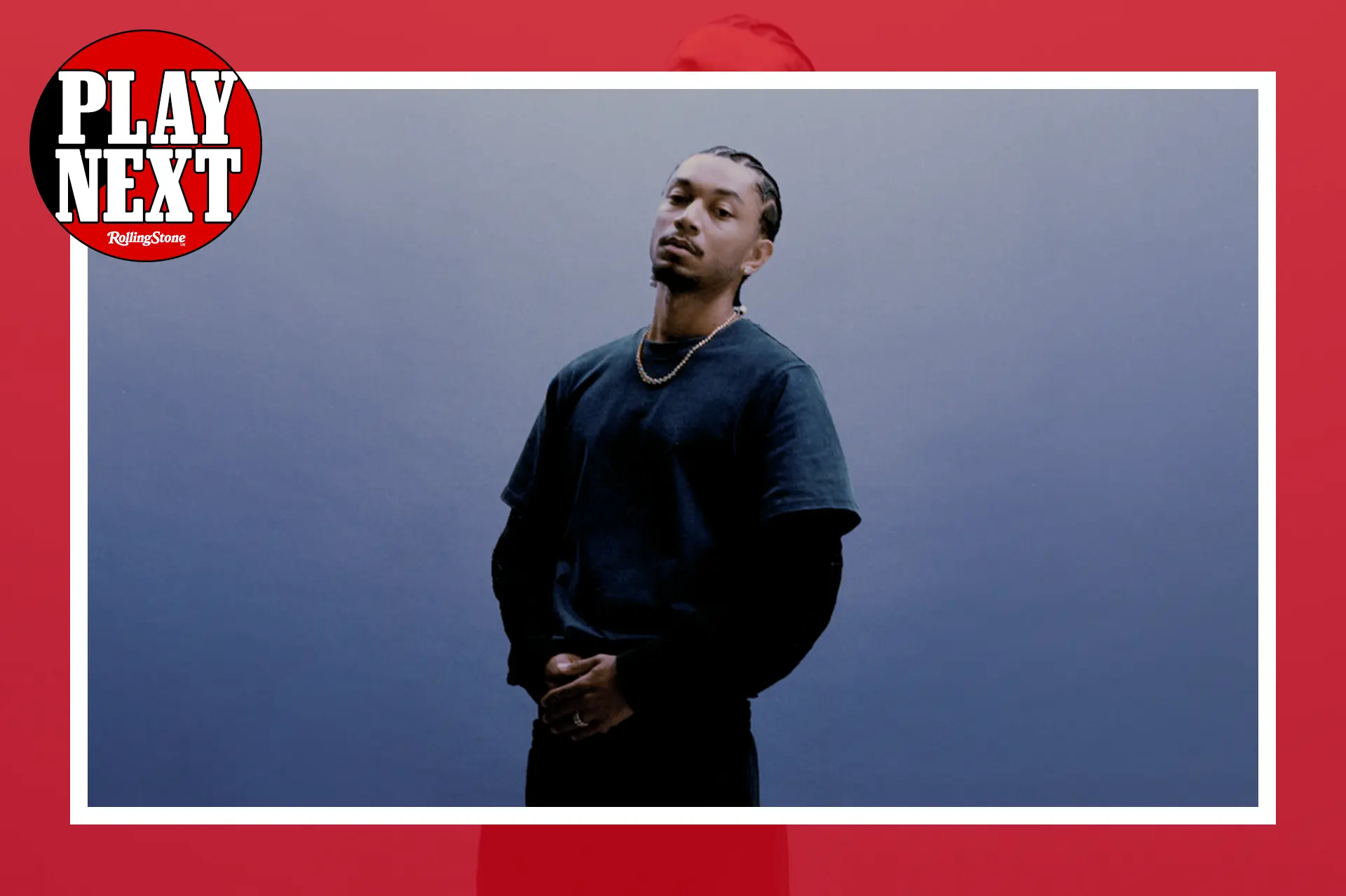
Every version of Wesley Joseph – past, present and future – appears on his debut album Forever Ends Someday. For over half a decade now, the Walsall-born, London-based singer, rapper and filmmaker has been experimenting in the liminal spaces between hip-hop, rap, soul, R&B and pop, and brings it all together on a debut album that feels aligned in its message but limitless in its sonic scope.
“I always strive to be better, and this album is a movie,” Joseph tells Rolling Stone UK. “It’s a bombastic record, and I always try and punch above my weight class when it comes to my creativity. Where I want to be, I’ll manifest it in real time and then by nature I move forwards.”
Forever Ends Someday sees Joseph working with a wide range of sonically diverse producers and collaborators including Nicolas Jaar, former Brockhampton member Romil Hemnani, A. K. Paul and more to create an album that represents a lifetime until now, and the one to follow.
Ahead of the release of Forever Ends Someday this week (April 10), read our interview with Joseph and listen to his music via our Play Next playlist on Spotify below.
Your album has been finished for a while – has your relationship with the songs changed in that time and through speaking about it in interviews like these?
That’s an interesting question. I’ve come to understand things that might have felt like accidents, or things I did without realising, were so intentional in more ways than I thought, yeah. It’s even just about understanding where I’m at in my growth as an artist as well, where I’m at right now and the things I want to make – I only have access to that vision because I made this album.
You largely shut yourself away from the world to make this album – is that a necessary step to really immerse yourself in the world of what you’re making?
At the start of the first year of making it I was on tour, but very shortly after that, it became fully intensive. Every day I was just trying to craft away at this thing and build on it. The first year was a little bit more free experimenting, and I was just trying to make myself not comfortable. I got comfortable in terms of what I knew I could make, but then there were all these touchpoints from the previous work that felt like new ground. I wanted to explore that with a little less care and perfection, trying to push boundaries and do things I haven’t done before.
The year after was definitely more about ‘OK, what am I trying to say? How does this all make sense?’ The final six months was about, ‘How can these songs I’ve picked be the best versions of themselves? How can they be the most true to themselves? How can I create four corners of a room that perfectly make sense with each other, even though the corners are really far apart at times?’
Speaking of these corners, you use your voice in so many different ways on this album, from soft singing to aggressive rapping and beyond – how did you find all these different textures to your voice?
I was just exploring and feeling it out. On every project, I worked out how to use my voice more by just experimenting and pushing it to a point where it feels a bit uncomfortable, and music that didn’t feel right was made in the process. Over time, you just find these pockets where you can exist in, and it’s yours. It’s not an interpretation – it just feels like your music again, but it’s something different.
Your list of collaborators on this album is so varied. What makes a good collaborator for you?
I work well with people that align with how I see things holistically. They all have really specific powers and when we work together, they do exactly what the songs needed from their perspective. There’s a layer of patience and understanding and egolessness and care that they all have.
Was there a mission statement of sorts that you would give to them all, to represent what you saw this album as being?
The conversations in the room were, ‘I want to make a contemporary classic record. I want to make something that stands the test of time and isn’t responsive to what’s happening’. There was this phrase we used to say, ‘future heritage music’, something that is future music, but will be one day recognised as heritage. Something that looks forward, is aware of what it comes from, but exists today as a reference point. That was the statement in terms of the grandeur and the scale – I wanted it to feel like a movie of an album.
I want someone who doesn’t listen to rap to be like, ‘I’ll play that record’. If someone doesn’t like psychedelic or dance or something, I want them to go, ‘OK, play this record’. I wanted it to be something that could exist on multiple planes and wasn’t afraid of itself and just felt new, felt original, was true to myself, and told my story.
You worked in Switzerland, London, LA and more but mostly wrote lyrics back home in Walsall – what was that experience like?
There are songs [on the album] that were really close to home. Going back to where I started, walking around in the rain and sitting in the park and the places I used to go to, it all flowed back. It was the perspective of firstly how far I’ve come, but then also the memories and the essence of the place and what I am. It was a lot easier to access that when I was in Walsall with no internet and not online, not in the smoke, just silence, family, old friends. I felt like a teenager again.
Was it particularly important, then, to have your school friend and fellow Walsall native Jorja Smith on the album with you?
In hindsight, it’s a huge part of it and it’s so important. But before I made the song [‘July’], it wasn’t something that I pre-empted. I always lead with the music first. The song got made, and as I was writing it we spoke together. I was like, ‘Oh my God, this actually makes total sense!’. That song is about growing up, and it’s very organic and to the core of who I am and what I represent. It’s about rejoicing and loss and growth and where we’ve come from. It just called for her. I’m so happy we made it, because now in hindsight, I’m like, ‘That’s our song, and no one else could ever fill that space’.