
Hollywood, Hitchcock, and Jonathan Anderson’s Dior Cruise debut
Staged at the Los Angeles County Museum of Art, Dior creative director Jonathan Anderson found his muse in the master of suspense
With a legacy like Christian Dior’s, it’s no surprise the late-couturier’s ghost continues to haunt the house’s creative directors. Rewatching Frédéric Tcheng’s 2014 documentary Dior and I makes that pressure feel almost tangible: Raf Simons pushes himself to meet the weight of expectation ahead of his couture debut, while seamstresses describe feeling Dior’s presence in the atelier, as though the house’s founder still lingers like a phantom from the past.
That sense of inheritance feels just as present in Jonathan Anderson’s tenure. A year into his role, the Irish designer’s codes have been firmly established – but it’s the parallels that come into focus following his Cruise debut in Los Angeles, which draws on the maison’s Tinseltown legacy.
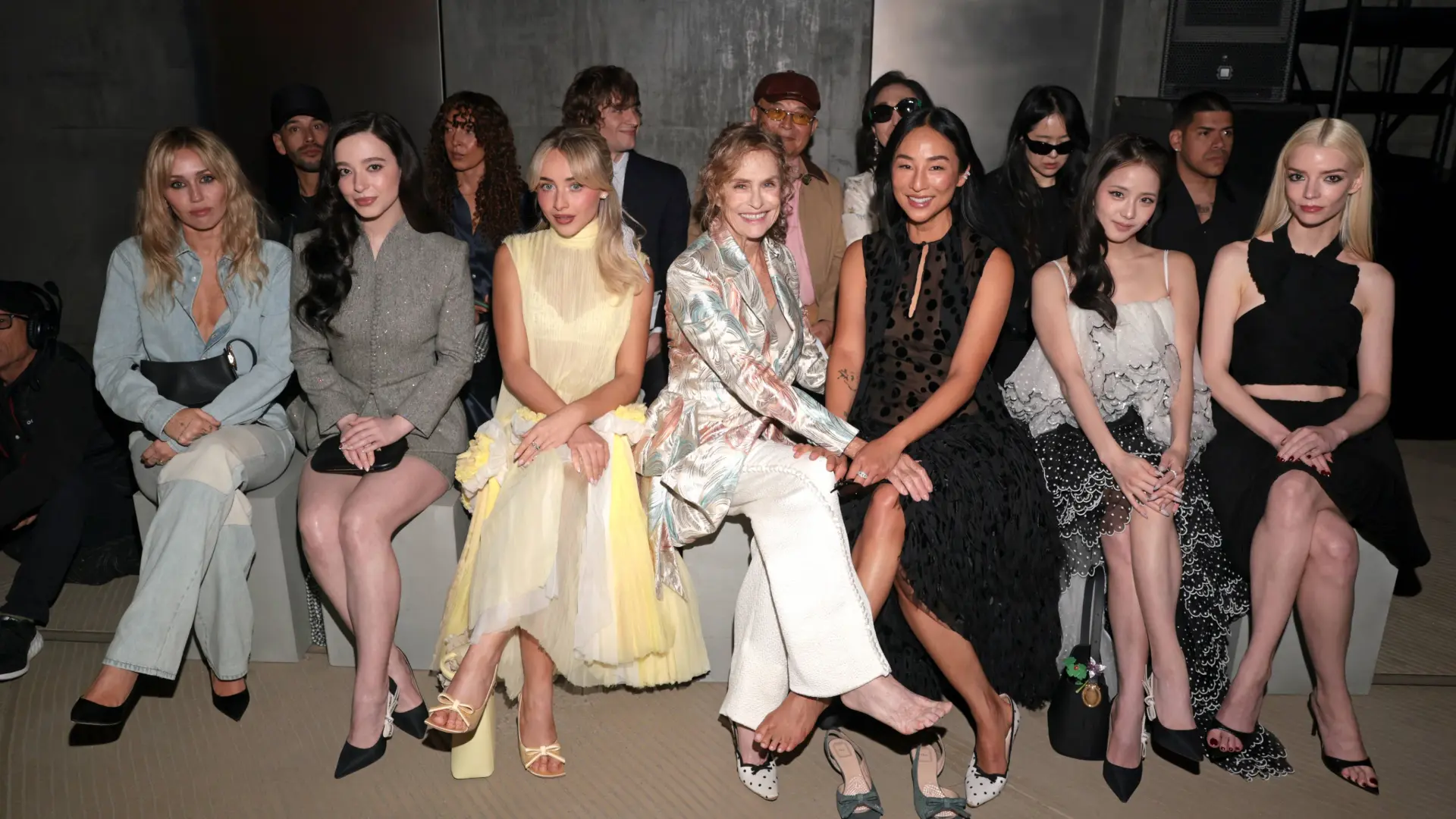
Staged at the Los Angeles County Museum of Art, the show unfolded as a full-scale Hollywood spectacle. A-list guests including Miley Cyrus, Role Model, and Sabrina Carpenter sat alongside downtown icon Kim Gordon, underscoring the collision of old Hollywood glamour and contemporary cool.
Christian Dior’s own relationship with Hollywood is storied having dressed no shortage of stars. saw him dress some of cinema’s biggest stars, including Grace Kelly, but this collection begins with Marlene Dietrich’s famous insistence on working with the couturier for Alfred Hitchcock’s Stage Fright: “No Dior, no Dietrich.”
While Marlene Dietrich’s androgynous style has long made her a muse for designers, Anderson’s focus here centres firmly on Alfred Hitchcock. The brand teased the collection last week with a black-and-white sequence mirroring Grace Kelly in To Catch a Thief along with other famous Hitchcock blonds like Janet Leigh in Psycho and Tibby Hedren in The Birds.
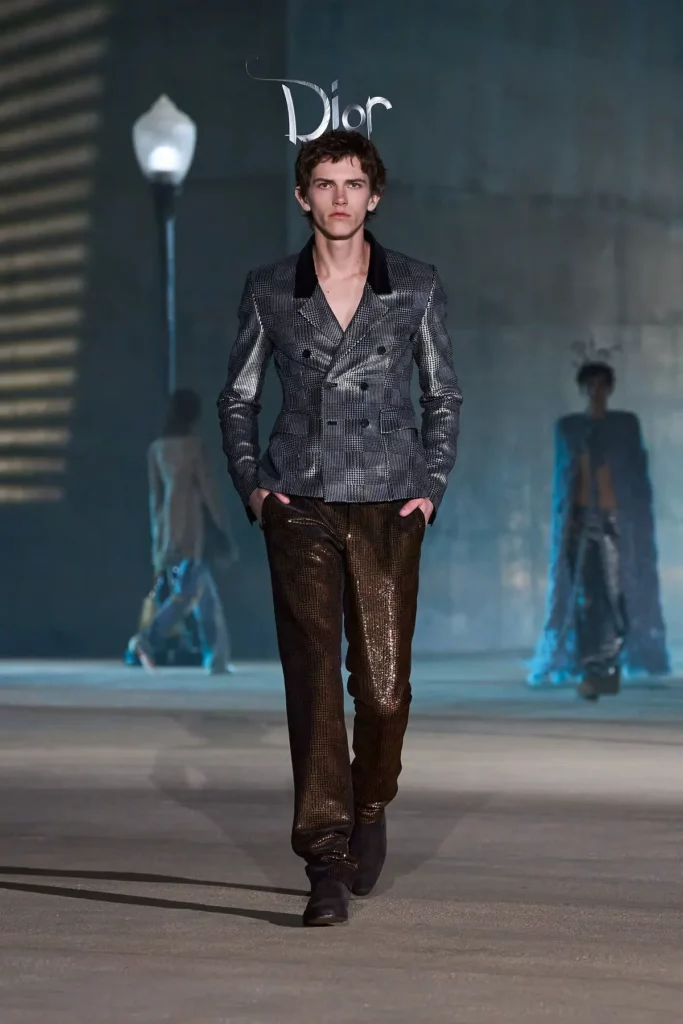
Drawing inspiration from the master of suspense feels fitting for Anderson, whose off-kilter sensibility has made him something of a contemporary fashion prodigy. Having already established his codes – modernising the Bar jacket, a penchant for denim, and a lived-in ease – he now twists these familiar elements through a lens of unease.
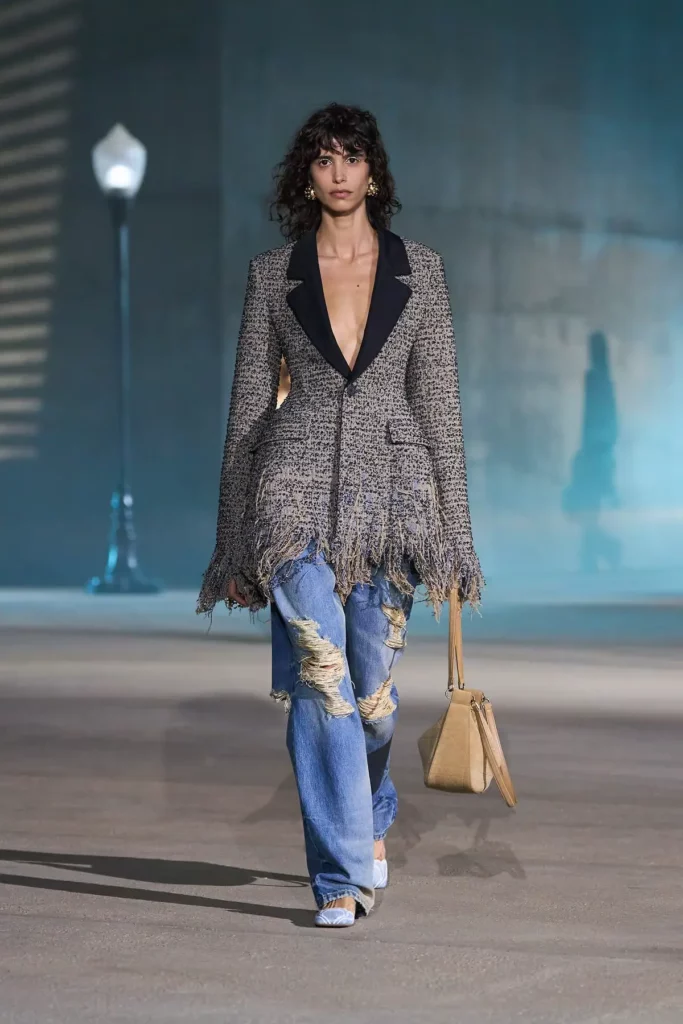
That influence echoed through the show’s opening looks, where high necklines, draped bodices, and drop-waist 1920s silhouettes recalled the polished elegance of Hitchcock heroines. Elsewhere, Anderson disrupted Dior signatures: the Bar jacket appeared frayed, while distressed denim resembled battered Venetian blinds – a classic noir motif.
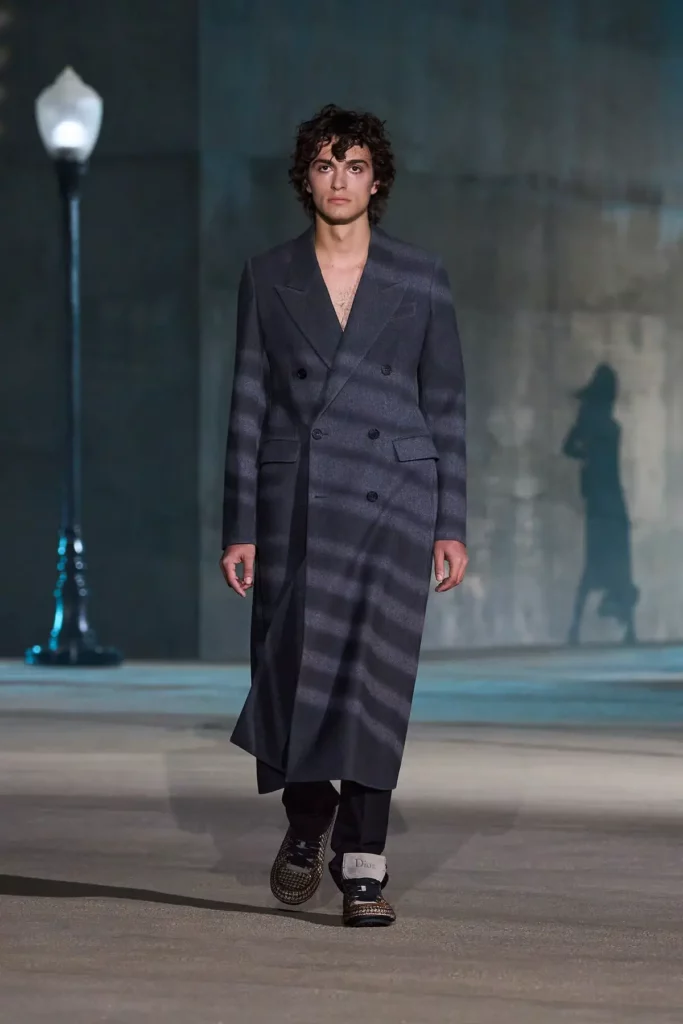
Chiaroscuro, a visual device central to Hitchcock’s suspenseful worlds, found its most literal expression in the outerwear. One coat, subtly contrasted with shadow-like panels, evoked the effect of peering through half-closed blinds, turning voyeurism into a fashion gesture.
Anderson nodded to red-carpet dressing through petal-paillette sundresses and metallic fibres woven into the men’s tailoring, but he anchored the collection in a distinctly West Coast ease. His instinct for separates gave the looks the feeling of a complete wardrobe rather than a series of standalone statements.
Separated by decades, Dior and Anderson share striking similarities in their affinity with Hollywood. Dior earned an Academy Award nomination for Best Costume Design for the 1947 film Les Amants de Montparnasse (Montparnasse 19), cementing an early link between Parisian fashion and the silver screen. Anderson, meanwhile, has also worked within film costume, collaborating with director Luca Guadagnino on Challengers and Queer.
In that sense, Anderson’s debut doesn’t just inherit Dior’s legacy – it enters a long-running conversation between fashion, film, and power, one where Hollywood and couture have always been negotiating with each other.
Discover the Dior Cruise 2027 collection at dior.com.